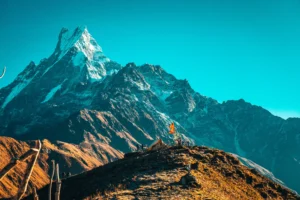
Nepal Restricted Area Permits 2026: Solo Trekkers Now Allowed in Upper Mustang, Manaslu & Dolpo
For over three decades, Nepal’s restricted-area rulebook contained one line that quietly ended thousands of trip plans: minimum two trekkers per permit. If you were a solo traveler dreaming of Upper Mustang’s walled capital or the Manaslu Circuit, your options were finding a stranger on a forum, paying an agency for a “ghost” second trekker, or giving up. As of 22 March 2026, that rule is gone. Nepal restricted area permits are now issued to solo trekkers across all of the country’s restricted zones — Upper Mustang, Manaslu, Tsum Valley, Nar Phu, Dolpo, Kanchenjunga, Humla and the rest.
That’s the headline, and it’s real. But most of the rewrites circulating online stop there, and what they leave out is exactly what you need: a guide is still legally mandatory, “solo” does not mean “independent,” a second fee reform three months earlier quietly changed Upper Mustang’s price structure entirely, and the TIMS card situation is now different region by region. Here’s the full picture, checked against the actual notices rather than each other’s blog posts.
What Changed on 22–23 March 2026
Nepal’s Department of Immigration, acting on a proposal from the Trekking Agencies’ Association of Nepal (TAAN), put three changes into effect:
1. Solo trekkers can now get Restricted Area Permits (RAPs). The minimum-two-foreigners rule is abolished across all ~15 restricted zones. A single trekker can have a RAP issued in their own name, applied for through a registered trekking agency. This formalizes what was already happening informally — the “ghost trekker” workaround, where agencies filed a second phantom name, was an open secret for years. Now it’s simply unnecessary.
2. The guide-to-trekker ratio is now 1:7. One licensed guide may accompany up to seven trekkers on a restricted-area permit group, replacing the more restrictive previous arrangement. For small groups this cuts per-person costs; for agencies it makes fixed departures easier to run. Exceeding 1:7 is not permitted — groups of eight need a second guide.
3. Permits can now be processed before you arrive in Nepal. Previously you had to be physically in Nepal before your RAP application could start, which cost trekkers on tight schedules one to three working days in Kathmandu. Under the new system, your agency can file the application in advance using your passport plus either a visa number or a visa application submission ID. Your permit can be ready when you land.
One date nuance for the record: the Department of Immigration’s notice is dated 8 Chaitra 2082 (22 March 2026), with TAAN’s formal submission published on 23 March — which is why you’ll see both dates cited. Both refer to the same reform.
What Did NOT Change (Read This Twice)
A licensed guide is still legally mandatory in every restricted area. Solo means you can be the only client on the permit. It does not mean you can walk alone. Guideless trekking in restricted zones remains illegal, permits are still issued only through registered Nepali agencies, and checkpoints (Kagbeni for Upper Mustang, Jagat and Philim for Manaslu) still inspect papers. And remember the separate 2023 rule still applies on regular routes too — the full picture is in our guide vs solo trekking breakdown, but the short version is that nobody has reopened Nepal to fully independent trekking. Anyone telling you otherwise is selling something or hasn’t read the notice.
Also unchanged: conservation-area permits and their fees (ACAP, MCAP, KCAP — typically NPR 3,000 each), the checkpoint system, and — despite what several rewrites claim — the Upper Dolpo RAP fee, which was not part of any 2025–2026 reform. Restricted-area processing also checks proof of insurance covering helicopter evacuation, so carry a policy that covers trekking to at least 5,500 m.
The Other Reform Everyone Conflates: Upper Mustang’s New Fee
Three months before the solo rule changed, a Cabinet decision gazetted on 22 December 2025 replaced Upper Mustang’s famous flat fee — USD 500 for 10 days, unchanged since the region opened in 1992 — with USD 50 per person per day, charged only for days actually spent inside the restricted zone north of Kagbeni.
This is a genuinely big deal, and whether it helps you depends entirely on your itinerary. A 5-day jeep tour that used to carry the full $500 permit now costs $250. A 3-day Tiji Festival visit costs about $150 instead of $500. A classic 10-day trek costs the same $500 it always did. Only stays longer than 10 days now cost more than before — and few itineraries do. The daily rate applies to everyone entering by any means: on foot, by jeep, motorbike, or helicopter.
Current Restricted Area Permit Fees (July 2026)
| Region | RAP fee | Conservation permit | Solo allowed? |
|---|---|---|---|
| Upper Mustang | $50/person/day (was $500/10 days until Dec 2025) | ACAP NPR 3,000 | Yes |
| Manaslu | Sep–Nov: $100 first week + $15/day after · Dec–Aug: $75 + $10/day | MCAP + ACAP (NPR 3,000 each) | Yes |
| Tsum Valley (Manaslu add-on) | Sep–Nov: $40/week · Dec–Aug: $30/week | Covered by MCAP | Yes |
| Nar Phu | Sep–Nov: $100/week · Dec–Aug: $75/week | ACAP NPR 3,000 | Yes |
| Upper Dolpo | $500 first 10 days + $50/day after (unchanged) | Shey Phoksundo NP fee | Yes |
| Lower Dolpo | $20/week | Shey Phoksundo NP fee | Yes |
| Kanchenjunga | $20/week (first 4 weeks) | KCAP NPR 2,000 | Yes |
A useful quirk worth knowing: the RAP replaces TIMS. If your trek runs entirely inside a restricted area, you don’t buy a TIMS card on top of it.
And While We’re Correcting the Record: TIMS in 2026
The TIMS card has quietly become a region-by-region question, and outdated blanket statements (“TIMS is mandatory for all treks” / “TIMS is dead”) are both wrong:
- Everest region: TIMS is no longer enforced — the Khumbu Pasang Lhamu Rural Municipality’s local permit replaced it.
- Annapurna region: TIMS is no longer enforced on the main routes; ACAP is the permit that matters and gets checked.
- Langtang, Rara and several far-western regions: TIMS still applies, now as a digital e-TIMS with QR codes scanned at checkpoints rather than the old paper card.
- Restricted areas (Manaslu, Mustang, Dolpo, etc.): the RAP covers you — no separate TIMS for the restricted sections, though your agency will sort any paperwork for approach sections.
Full region-by-region detail lives in our Nepal trekking permits guide, which we’ve updated for these changes.
What This Actually Means, Region by Region
Upper Mustang: the biggest winner
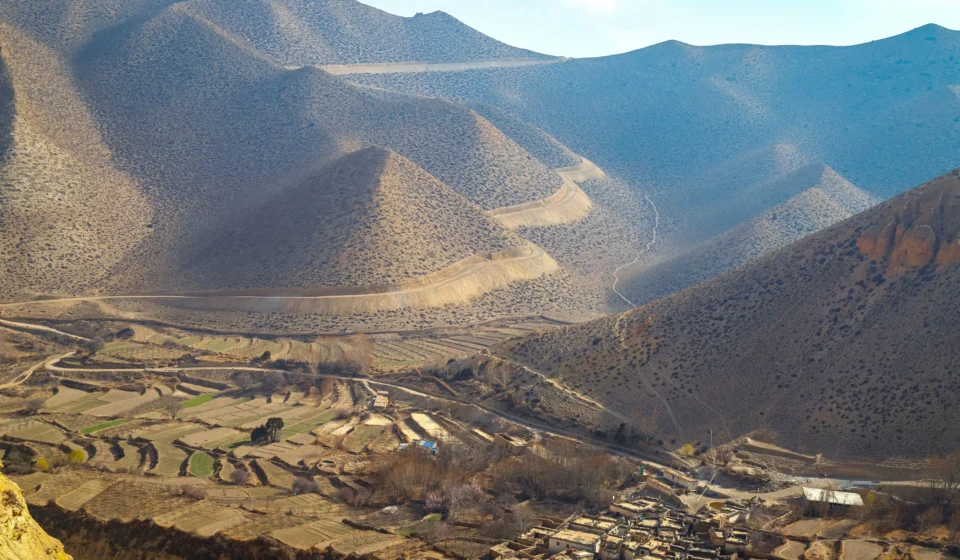
Solo travelers were hit hardest by the two-person rule here because Upper Mustang’s $500 permit made “ghost trekker” workarounds expensive, and the region’s jeep-tour format attracts exactly the solo cultural travelers the old rule excluded. Now a solo trekker pays $50/day for their actual days inside the zone, gets the permit pre-processed before landing, and hires one guide instead of subsidizing a phantom companion. Short visits — Tiji Festival, Lo Manthang jeep tours — just became roughly half price or better. If the Forbidden Kingdom has been on your list, our Upper Mustang guide covers the route itself; the economics have simply never been this friendly to solo travelers.
Manaslu: the practical unlock
The Manaslu Circuit is where the old rule genuinely distorted trips — it’s a teahouse trek that solo trekkers could walk perfectly well, blocked by paperwork rather than terrain. That’s over: an autumn solo trekker now pays $100 for the restricted week, plus MCAP and ACAP at NPR 3,000 each — roughly $160 in total permits — plus a guide at $25–35/day. The restricted section (Jagat to the far side of Larke La) fits inside one permit week on standard itineraries. Trek December–August and the RAP drops to $75. With the 1:7 ratio, joining a small fixed-departure group to split guide costs is now cleaner too.
Dolpo: read the fine print
Two different stories here, frequently mashed together. Lower Dolpo — including the Shey Phoksundo Lake trek — was always the affordable one at $20/week, and solo access now makes it a realistic target for a single traveler with expedition appetite and a good agency. Upper Dolpo still costs $500 for the first 10 days plus $50/day after — the December reform covered Upper Mustang only, whatever some rewrites claim. Solo permits are now possible for both, but Dolpo’s real gatekeeper was never paperwork: it’s remoteness, camping logistics, and 5,000 m passes. The permit change removes the administrative barrier, not the seriousness.
How to Apply as a Solo Trekker (2026 Process)
- Choose a registered trekking agency. Non-negotiable — individuals cannot file RAP applications directly, and this didn’t change.
- Send your documents before you fly: passport scan, plus your visa number or the submission ID from your online visa application, plus proof of insurance covering evacuation.
- The agency files at the Department of Immigration. Processing typically takes 1–3 working days; with pre-arrival filing, the permit can be ready before you land.
- Trek with your licensed guide. Your permit is checked at entry checkpoints; your guide handles the formalities.
Total added cost of going solo versus the old workaround: negative. You’ve stopped paying for a phantom second permit and now pay only your own fees plus a guide you were legally required to have anyway.
Our Take: A Correction, Not a Revolution
Cut through the press-release framing and this reform does one honest thing: it aligns the rules with reality. Solo trekkers were already reaching these regions through workarounds that helped nobody — least of all the trekker, whose paperwork was technically irregular if anything went wrong. Now the same trekker is documented, insured, guided, and paying full fees into regions whose economies — guides, porters, teahouse owners in some of Nepal’s poorest districts — depend on every visitor. The government keeps its safeguards; remote communities get more trekkers; solo travelers stop being second-class applicants. That is rare, sensible policy.
One honest caveat: the Department of Immigration has not yet published an English version of the notice on its website, so travelers abroad can’t easily verify it from an official page — the confirmation comes from the consistent reporting of Kathmandu agencies who file these permits daily, several of whom have published the translated notice. If a booking agent quotes you the minimum-two rule in late 2026, they’re working from stale information. Politely send them this page.
FAQs
Can I trek Upper Mustang or Manaslu completely alone now? No. You can be the only client on the permit (“solo”), but a licensed guide arranged through a registered agency must accompany you. Guideless trekking in restricted areas remains illegal.
When did solo restricted-area permits become legal in Nepal? The Department of Immigration’s notice took effect 22 March 2026, with TAAN’s submission published 23 March 2026.
How much does the Upper Mustang permit cost in 2026? USD 50 per person per day inside the restricted zone (plus ACAP, NPR 3,000). The old $500-for-10-days flat fee was abolished on 22 December 2025.
Did the Upper Dolpo permit get cheaper too? No — Upper Dolpo remains $500 for the first 10 days plus $50/day after. Only Upper Mustang’s fee structure changed.
Is TIMS still required in 2026? Not in the Everest or Annapurna regions. It still applies (as digital e-TIMS) in Langtang, Rara, and several other regions, and the RAP replaces it entirely inside restricted areas.
Can my permit be arranged before I arrive in Nepal? Yes — since March 2026 your agency can file using your passport and visa number (or visa application submission ID), typically 1–3 working days’ processing.
What is the guide-to-trekker ratio now? One licensed guide per seven trekkers, maximum. Larger groups need additional guides.
The Bottom Line
The March 2026 reform is the best news solo trekkers have had from Kathmandu in a decade: Upper Mustang, Manaslu and Dolpo are open to you, legitimately, with your own name on the permit and the paperwork done before your plane lands. Just carry the two facts the headlines drop: your guide is still mandatory, and your permit still comes through an agency. Pick your region — Upper Mustang, Manaslu, or Shey Phoksundo — check the current permit fees, and go while the trails are still quiet.
Featured Image Credit: Ashok J Kshetri