Manaslu Circuit Trek: Nepal’s Best-Kept Secret (2025–2026 Guide)
If the Annapurna Circuit of the 1990s is what you’re chasing—teahouses without crowds, a trail that still feels wild, views of an 8,000-meter giant from your breakfast table—the Manaslu Circuit Trek is where you’ll find it. Circling the eighth-highest mountain on Earth (8,163 m), this trek has quietly become one of Nepal’s most rewarding routes precisely because so few people have caught on yet.
This guide covers everything you need to plan a Manaslu Circuit trek in 2025–2026: the route, difficulty, permits, costs, best seasons, and the practical details that don’t always make it into glossy brochures.
Why Trek the Manaslu Circuit?
Manaslu sits in the Gorkha district, west of the Kathmandu Valley and just east of the Annapurna region.
The circuit follows the Budhi Gandaki River upstream through subtropical forest, Gurung and Tibetan villages, and high alpine terrain before crossing the Larkya La Pass at 5,160 meters and descending into the Annapurna region near Dharapani.
What sets it apart is restriction, not remoteness alone: because the area sits along a sensitive border zone with Tibet, trekkers need a special permit and must travel with a licensed guide, which naturally caps numbers.
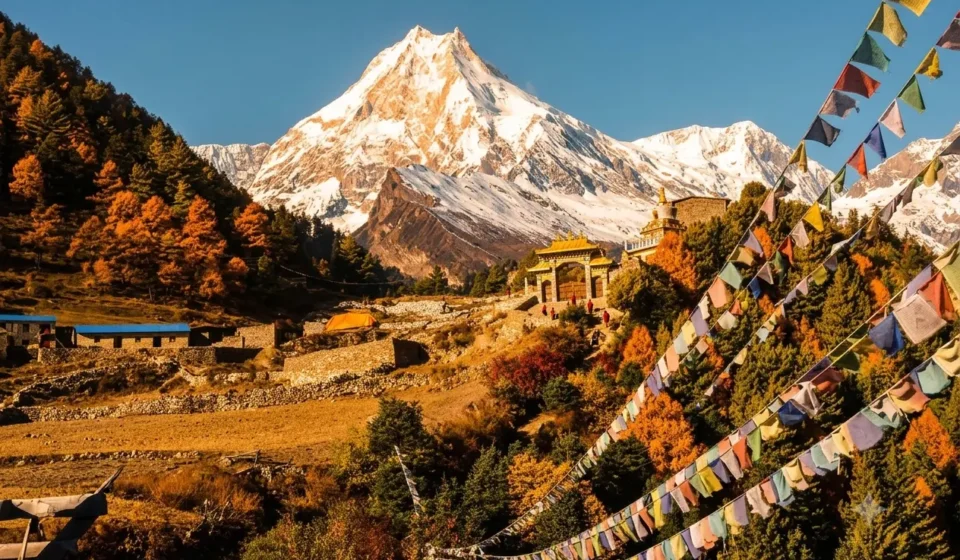
The result is a trail with genuine teahouse culture, minimal commercialization, and some of the best mountain panoramas in Nepal—including close-up views of Manaslu, Himalchuli, Ngadi Chuli, and the Annapurna massif from the pass.
Photo by 阿了个 哲
Manaslu Circuit Trek: Key Facts
- Duration: 14–18 days (Kathmandu to Kathmandu), typically 12–15 days of actual trekking
- Distance: Roughly 150–180 km round trip
- Max altitude: Larkya La Pass, 5,160 m
- Difficulty: Strenuous — comparable to or slightly harder than Annapurna Circuit
- Best seasons: March–May (spring) and September–November (autumn)
- Permits required: Manaslu Restricted Area Permit (RAP), Manaslu Conservation Area Project (MCAP) permit, and Annapurna Conservation Area Project (ACAP) permit
- Guide requirement: Mandatory — solo trekking is not permitted in the restricted section
- Estimated cost: $1,200–$2,200 USD depending on group size and season
The Route: Day-by-Day Overview
Lower Section: Soti Khola to Deng
The trek typically starts from Soti Khola (about 7–8 hours by road from Kathmandu). The first few days follow the Budhi Gandaki through warm, lush forest and across dramatic suspension bridges, climbing gradually through villages like Machha Khola, Jagat, and Deng. This section is humid and subtropical—a contrast to what comes later.
Middle Section: Deng to Samagaon
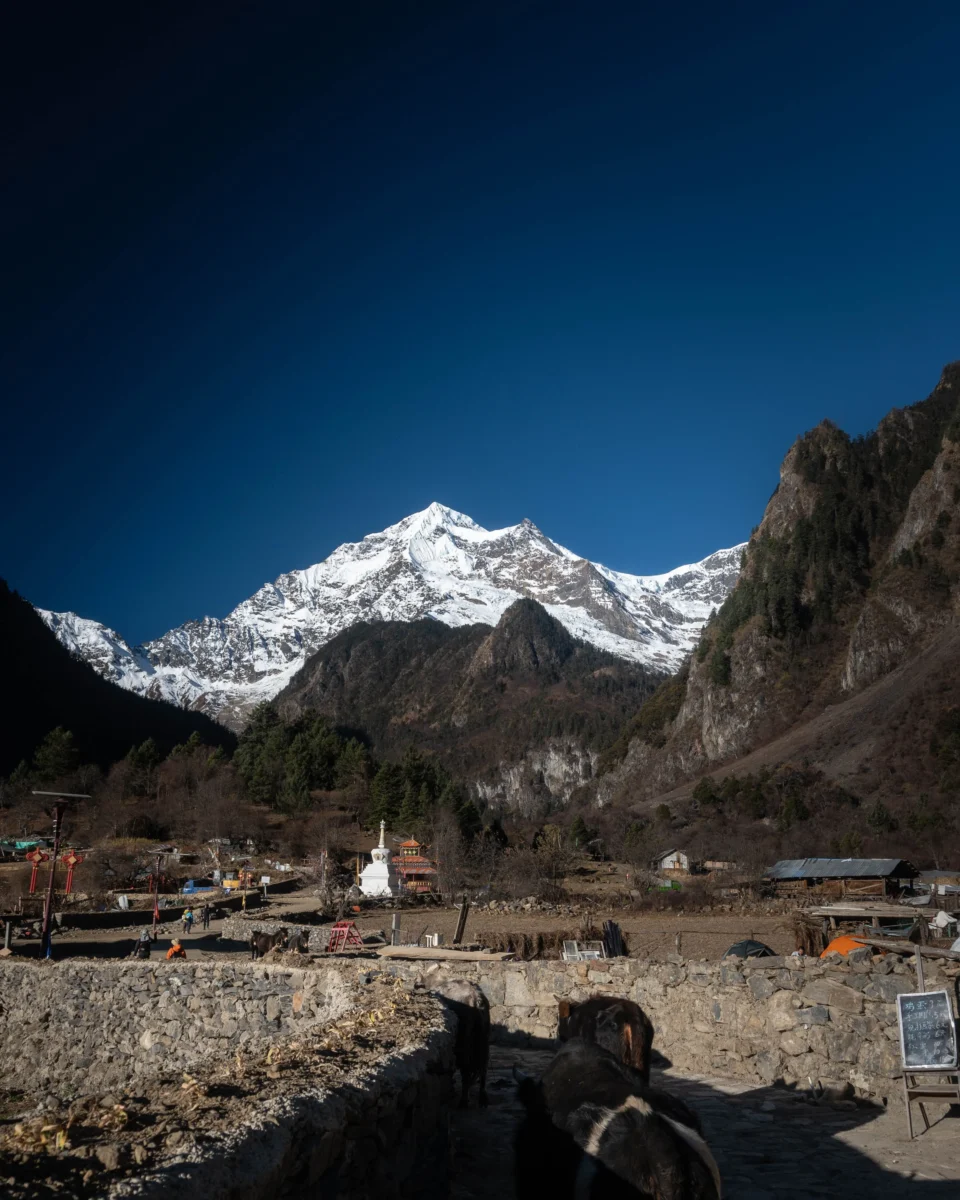
From Deng, the trail climbs into Tibetan-influenced territory. Namrung, Lho, and Shyala are highlights, with mani walls, chortens, and your first unobstructed views of Manaslu itself. Samagaon (3,530 m), a large Tibetan Buddhist village beneath the mountain, is the traditional acclimatization stop and a good base for a side trip to Manaslu Base Camp or Pungyen Gompa.
High Section: Samagaon to Larkya La and Beyond
From Samagaon, trekkers move to Samdo (3,860 m) and then Dharamsala (also called Larkya Phedi, 4,460 m) to stage for the pass crossing. The Larkya La crossing is the trek’s centerpiece: a long, cold, early-start day that rewards you with views of Manaslu, Cheo Himal, Himlung Himal, and Annapurna II. The descent drops into Bimthang, a beautiful alpine meadow, before the trail continues down to Tilije and Dharapani, where it joins the Annapurna Circuit route.
Difficulty and Altitude Considerations
The Manaslu Circuit is rated strenuous, not because any single day is technically difficult, but because of sustained altitude exposure and the remoteness of the high section. Trekkers spend several consecutive days above 3,500 meters, and the Larkya La day itself involves 8–9 hours of walking with limited escape options.
Acclimatization days at Samagaon and Samdo are essential, not optional. Altitude sickness is the most common reason trekkers turn back on this route, so a conservative pace and the “climb high, sleep low” principle matter more here than on shorter, lower treks.
Best Time to Go
Autumn (September–November) offers the most stable weather, clear mountain views, and is the most popular window—though “popular” on Manaslu still means a fraction of Everest or Annapurna traffic. Spring (March–May) brings rhododendron blooms in the lower forest and good visibility, with slightly warmer nights at altitude. Winter trekking is possible in the lower sections but the Larkya La can close due to snow; monsoon season (June–August) brings leeches, landslide risk, and obscured views, so it’s best avoided.
Permits and Costs Breakdown
Because Manaslu is a restricted area, permit costs are higher than on unrestricted treks like Poon Hill or the standard Everest Base Camp route:
- Restricted Area Permit: roughly $70–$100 per week in season (September–November), less in other months, and it must be arranged through a registered trekking agency
- MCAP entry permit: around $30
- ACAP entry permit: around $30 (needed for the Annapurna-region exit)
- Guide: mandatory, typically $25–$35/day
- Teahouse accommodation and meals: $25–$40/day, higher than Everest or Annapurna due to the remoteness of supply lines
All-in, a guided 14–16 day Manaslu Circuit trek generally runs $1,200–$2,200 USD per person, including permits, guide, accommodation, and meals, but excluding international flights and Kathmandu hotel nights.
Practical Tips for the Manaslu Circuit
Book through a registered agency. The Restricted Area Permit can only be issued via a licensed Nepali trekking agency. Solo RAPs allowed since Mar 22, 2026; guide however is still mandatory.
Pack for a wider temperature range than you’d expect. You’ll sweat through humid forest at 700 meters and need a proper down jacket at Larkya La a week later.
Carry more cash than usual. ATMs disappear quickly past Arughat, and teahouse prices rise the higher and more remote you go.
Build in a buffer day. Weather delays at Dharamsala before the pass crossing aren’t rare, and having one spare day in your itinerary avoids a rushed, riskier crossing.
How Manaslu Compares to Other Treks
Trekkers often ask how Manaslu stacks up against Nepal’s better-known routes. Compared to the standard Everest Base Camp trek, Manaslu has a lower maximum altitude at its base camp turnoff but a higher pass crossing overall, and far fewer flights or crowds to contend with—there’s no Lukla-style bottleneck here, since most trekkers start by road from Kathmandu.
Compared to the Annapurna Circuit, which has seen a paved road creep into much of its lower route over the past decade, Manaslu still feels the way Annapurna did in its earlier years: teahouses run by the same families for generations, yak caravans on the trail, and villages where trekking tourism is a recent addition rather than the main economy. If you’ve done Poon Hill or the Annapurna Circuit and want something with a similar teahouse-trekking feel but noticeably more solitude, Manaslu is the natural next step up in both difficulty and reward.
Fitness and Training
Because the trek involves back-to-back days above 3,500 meters and a demanding pass day near 5,160 meters, a solid base of cardiovascular fitness matters more here than technical climbing skill. Most trekkers spend two to three months beforehand building up hiking stamina with weighted day hikes, stair climbing, and steady-state cardio. You don’t need mountaineering experience—there’s no technical climbing or glacier travel on the standard route—but you do need the lungs and legs to handle six to eight hours of walking at altitude on consecutive days, sometimes on rough, narrow trail sections cut into the hillside above the Budhi Gandaki.
What to Pack
A Manaslu packing list looks similar to other high-altitude teahouse treks, with a few extra considerations for the restricted, remote terrain. A four-season sleeping bag rated to at least -15°C is worth carrying since teahouse rooms above Samagaon get genuinely cold at night, and the high camps before Larkya La have minimal heating. Layering matters more here than almost anywhere else in Nepal because of the temperature swing between the lower forest and the high pass: a moisture-wicking base layer, a fleece or light down mid-layer, and a windproof, waterproof outer shell will cover most conditions.
Sturdy, well broken-in trekking boots with ankle support are non-negotiable given the rocky, sometimes icy terrain near Larkya La, and trekking poles make a real difference on the steep, loose descent into Bimthang. Bring a headlamp for the early pre-dawn start on pass-crossing day, water purification tablets or a filter since bottled water becomes expensive and environmentally wasteful the higher you go, and a basic first-aid kit including diamox for altitude, given how far the nearest clinic can be once you’re past Samagaon.
Frequently Asked Questions
Can I trek Manaslu without a guide?
No. Because the route crosses a restricted border area, Nepali immigration rules require every trekker to hold a Restricted Area Permit issued through a licensed agency and to be accompanied by a registered guide for the duration of the trek. This is enforced at permit checkpoints along the trail, so there’s no practical way around it, and trying to skip it can mean being turned back partway through.
Is the Manaslu Circuit harder than Everest Base Camp?
Most experienced trekkers rate Manaslu as slightly more demanding overall, mainly because of the Larkya La Pass crossing at 5,160 meters, which is higher than Everest Base Camp itself (5,364 m is close, but the EBC trek’s hardest single day is gentler than the Larkya La crossing) and because trail infrastructure and rescue access are more limited.
Do I need travel insurance with helicopter evacuation cover?
Yes, strongly recommended. Given the remoteness of the high section between Samagaon and Bimthang, comprehensive travel insurance that explicitly covers high-altitude trekking and helicopter evacuation is considered essential by every reputable trekking agency operating in the region.
Can the Manaslu Circuit be combined with other treks?
Yes. Many trekkers extend the route from Dharapani onward into the Annapurna Circuit or down to Pokhara via the Annapurna region trails, effectively turning it into a longer Manaslu-Annapurna combination trek for those with three or more weeks available.
Final Thoughts
The Manaslu Circuit rewards trekkers willing to handle a bit more logistical complexity and a noticeably higher pass than Nepal’s headline routes. In exchange, you get days of trail with barely another trekking group in sight, genuine Tibetan-Buddhist village life, and a 360-degree view from Larkya La that rivals anything in the Khumbu or Annapurna regions. For trekkers who’ve already done Everest Base Camp or the Annapurna Circuit and want something that still feels undiscovered, this is the next trek to put on the list.