Annapurna Base Camp Trek: The Complete 2026/2027 Guide (Cost, Itinerary, Permits)
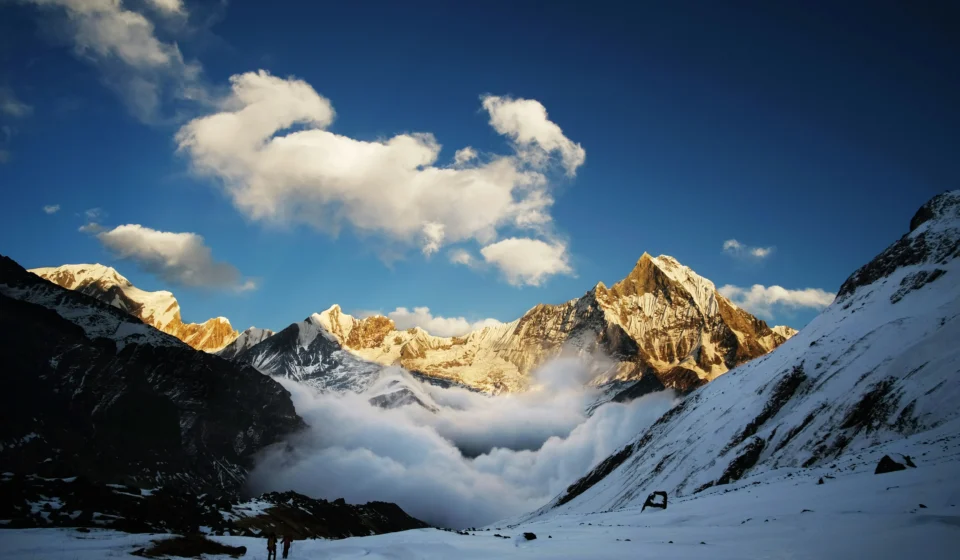
Stand at Annapurna Base Camp at dawn and you are inside a ring of mountains — Annapurna I (8,091 m), Annapurna South, Hiunchuli, Machhapuchhre — with ice walls rising on every side of you. No other teahouse trek in Nepal puts you inside the amphitheatre rather than looking at it from a ridge. That is why the Annapurna Base Camp trek (locals just say “ABC”) stays on every shortlist despite roads, crowds, and newer rivals.
Here is the honest version: ABC is shorter, cheaper, and lower than Everest Base Camp, but it is not “EBC lite.” The stone staircases out of Chhomrong will humble fit trekkers, and the Deurali–Machhapuchhre Base Camp corridor carries real avalanche risk in winter. This guide gives you the full 2026/2027 picture — a day-by-day itinerary through Ghorepani and Poon Hill into the Annapurna Sanctuary, a line-by-line cost breakdown, the current permit rules (which changed more than most blogs admit), and a direct answer to “should I do ABC, EBC, or the Circuit?”
ABC at a Glance
| Fact | Detail |
|---|---|
| Highest point | Annapurna Base Camp, 4,130 m |
| Duration | 7–11 days trekking (5 days possible, not recommended) |
| Distance | ~65–75 km round trip (route-dependent) |
| Difficulty | Moderate — long stair climbs, modest altitude |
| Permits | ACAP (NPR 3,000); TIMS status explained below |
| Guide | Legally required since April 2023 |
| Realistic cost | ~$600–900 independent-style; $700–1,500 packaged |
| Best months | October–November, March–April |
| Start/end | Pokhara (jeep to trailheads: Nayapul, Ghandruk, Siwai/Matque) |
ABC vs EBC vs Annapurna Circuit: Which One Is Yours?
This is the decision most readers are actually here to make, so let’s settle it before the itinerary.
| ABC | EBC | Annapurna Circuit | |
|---|---|---|---|
| Max altitude | 4,130 m | 5,364 m | 5,416 m (Thorong La) |
| Trekking days | 7–11 | 12–14 | 10–14 |
| Round-trip distance | ~65–75 km | ~130 km | ~160–230 km |
| Altitude sickness risk | Low–moderate | High | High |
| Character | One valley, into a mountain amphitheatre | High-altitude expedition feel | Full traverse: rice paddies to trans-Himalayan desert |
| Getting there | 25-min flight or day bus to Pokhara, then a short jeep | Lukla flight (weather-prone, ~$210+ each way) | Drive from Kathmandu/Pokhara |
| Typical cost | $600–1,500 | $1,200–3,000+ | $700–1,600 |
The honest self-selection test:
- Choose ABC if you have 7–10 days, want big-mountain drama without serious altitude exposure, or this is your first Himalayan trek above 4,000 m. It is the best value-per-day trek in Nepal.
- Choose EBC if the name matters to you (it does for many people, and that’s fine), you have two weeks, and you’re prepared for altitude sickness management above 5,000 m.
- Choose the Circuit if landscape variety beats a single destination for you and you can commit 12+ days. Crossing Thorong La is a bigger physical achievement than reaching ABC.
Terrain-wise, EBC is objectively harder: longer, higher, colder, with rougher trails above 4,000 m and more acclimatisation risk. ABC’s difficulty is concentrated in relentless stone staircases (Chhomrong’s are infamous) rather than altitude. If you handled Poon Hill comfortably, ABC is your logical next step up.
The Route: How You Actually Get Into the Sanctuary
All ABC routes funnel through one gate: Chhomrong (2,170 m), the last big Gurung village before the Modi Khola gorge. From there a single trail climbs through Sinuwa, Bamboo, Dovan, Himalaya, and Deurali into the Annapurna Sanctuary — a glacial basin ringed by ten peaks over 6,000 m, held sacred by the Gurung people.
What changes between itineraries is how you reach Chhomrong:
- Via Ghorepani and Poon Hill (recommended, 9–10 days): the classic horseshoe. You earn a sunrise over Dhaulagiri and the Annapurnas from Poon Hill (3,210 m), then traverse to Chhomrong via Tadapani. Better acclimatisation, better views, better story.
- Direct via Jhinu Danda (7 days): jeep from Pokhara to Siwai/Matque, walk to Chhomrong the same day. Efficient, and you still get the Jhinu hot springs.
- Rapid (5 days): jeep as far as possible, long days, skip Poon Hill. Only sensible if you’re already acclimatised from a previous trek.
Roads have crept up both sides of the valley — jeeps now reach Siwai/Matque and beyond toward Samrung — which is exactly why the Ghorepani loop is worth it: it keeps you on trails the road hasn’t touched.
Day-by-Day Itinerary 2026: The Classic 10-Day Route via Poon Hill
Day 0 — Kathmandu → Pokhara (820 m). Tourist bus $12–25, 8–10 hours; or fly 25 minutes for NPR 8,000–18,000 (~$60–135) depending on season and how early you book. Sort permits in Pokhara if you haven’t already.
Day 1 — Pokhara → Nayapul (drive) → Ulleri (1,960 m). 1.5-hour drive, then 4–5 hours walking. The day ends on the famous 3,000+ stone steps to Ulleri. Start slow; this staircase sets the tone for the whole trek.
Day 2 — Ulleri → Ghorepani (2,874 m). 4–5 hours through mossy rhododendron forest — spectacular in late March–April when the entire hillside flowers. Ghorepani is cold at night year-round; this is your first taste of real mountain air.
Day 3 — Poon Hill sunrise (3,210 m) → Tadapani (2,630 m). Up at 4:30 a.m., 45–60 minutes of switchbacks, then sunrise over Dhaulagiri (8,167 m), Annapurna South, and Machhapuchhre. Back for breakfast, then 6 hours of ridge and forest to Tadapani. A long, superb day.
Day 4 — Tadapani → Chhomrong (2,170 m). 5–6 hours. You descend deep into the Kimrong Khola valley and climb out again — welcome to the ABC pattern of losing hard-won altitude and buying it back in stairs. Chhomrong has the best bakeries on the route; enjoy them, because prices climb with every day beyond here.
Day 5 — Chhomrong → Bamboo (2,310 m). 4–5 hours. Down ~2,500 stone steps to the Chhomrong Khola, then up to Sinuwa and into the quiet forest of the upper gorge. From Sinuwa onward you’re in the Sanctuary corridor: no villages, only trekking lodges.
Day 6 — Bamboo → Deurali (3,230 m). 4–5 hours through Dovan and Himalaya, forest thinning into avalanche-swept slopes. Sleep at Deurali rather than pushing higher — it positions you to cross the avalanche-prone section early next morning, and 3,200 m is a sensible acclimatisation ceiling for the night. If you’re feeling the altitude, read our acclimatisation guide before you go — the rules are simple and non-negotiable.
Day 7 — Deurali → MBC (3,700 m) → Annapurna Base Camp (4,130 m). 5–6 hours. Start at first light: the Hinku Cave–MBC stretch is the trek’s one genuine avalanche zone, safest in the cold early hours. Past Machhapuchhre Base Camp the valley opens into the Sanctuary, and the last two hours to ABC are a slow, breathless walk into the amphitheatre. Sunset and sunrise here are why you came.
Day 8 — ABC → Bamboo (2,310 m). 6–7 hours, nearly all descent. Knees take the punishment altitude spared you. Trekking poles earn their weight today.
Day 9 — Bamboo → Jhinu Danda (1,780 m), hot springs. 5–6 hours back over the Chhomrong steps, then down to Jhinu. The riverside hot springs (small fee) are the single best recovery investment on the trek.
Day 10 — Jhinu → Samrung/Siwai (walk 1–2 hrs) → Pokhara (drive ~3 hrs). Cross the long suspension bridge, meet your jeep, and you’re eating lakeside dinner in Pokhara by afternoon.
Shorter on time? The 7-day version: jeep to Siwai/Matque, Day 1 to Chhomrong, then Days 5–10 above. You skip Poon Hill but keep the Sanctuary.
ABC Trek Cost 2026: The Honest Breakdown
Headline numbers first: a realistic independent-style trek (you + a hired guide, paying your own way) runs $600–900 per person. A full package from a Pokhara/Kathmandu agency runs $700–1,500, with solid mid-range operators clustering around $900–1,100 for 10 days. Anyone quoting $400 all-inclusive is cutting a corner you’ll eventually find.
Independent-style costs (10 days, per person)
| Item | Cost (USD) |
|---|---|
| ACAP permit | ~$22 (NPR 3,000) |
| TIMS card (see permits section) | ~$15 (NPR 2,000) |
| Licensed guide ($25–35/day × 10) | $250–350 |
| Kathmandu–Pokhara return (tourist bus) | $25–50 |
| Pokhara–trailhead jeeps (return) | $20–50 |
| Rooms (NPR 300–500 low, up to NPR 800–1,000 near ABC) | $30–70 |
| Food & drink ($20–28/day, rising with altitude) | $200–280 |
| Hot showers, charging, Wi-Fi, hot springs | $20–40 |
| Total | ~$610–900 |
Add a porter ($20–25/day, shareable between two trekkers) and you’re still usually under $1,000. Splitting guide and porter costs in a group of 2–4 is the single biggest saving available. Fly Kathmandu–Pokhara instead of the bus and add roughly $120–270 return.
What the numbers hide: cash only beyond Pokhara (carry NPR, small notes), a dal bhat that costs NPR 500 in Chhomrong costs NPR 800+ at MBC, and “free” room deals usually oblige you to eat where you sleep. Budget a spare $100 for weather delays. For how ABC sits against other routes, our Nepal trekking costs & budget guide has the full comparison — and if you’re weighing it against Everest, the EBC cost breakdown will show you why ABC is roughly half the outlay.
What packages include (and don’t)
A fair $900–1,100 package covers permits, ground transport from Pokhara, guide + porter, rooms, and three meals a day on the trail. It almost never covers drinks (including bottled water), hot showers, charging, Wi-Fi, tips (budget ~$5/day guide, ~$3–4/day porter), or travel insurance. Ask specifically about those five lines before you sign.
Annapurna Base Camp Permits in 2026: What’s Actually Required
Two documents matter, and one of them is a mess online, so here is the ground truth.
1. ACAP — Annapurna Conservation Area Permit. Non-negotiable. NPR 3,000 (~$22) for foreigners, NPR 1,000 for SAARC nationals, free under age 10. Buy it at the Nepal Tourism Board offices in Kathmandu or Pokhara, or online via NTNC’s e-permit portal (epermit.ntnc.org.np). Bring your passport and a passport photo. No timing restriction, no season pricing. It gets checked — the first checkpoint is at Birethanti, minutes from the Nayapul trailhead, so don’t plan on slipping through.
2. TIMS — and the confusion around it. You will find 2026 blogs claiming TIMS is dead and others claiming it’s mandatory. Reality: the TIMS card (NPR 2,000 individual) still exists on paper and agencies still routinely issue it, but enforcement on the ABC trail has been inconsistent since the system was overhauled in 2023. If you book through an agency, they’ll include it — fine, it’s $15. If you’re arranging things yourself, ask at the NTB office in Pokhara what’s currently being checked, because this genuinely shifts. Our Nepal trekking permits guide tracks the current status across all regions.
3. The guide rule. Since April 2023, foreign trekkers are required to hire a licensed guide for treks in Nepal’s national parks and conservation areas, ABC included. Enforcement has had gaps, but checkpoints in the Annapurna region do ask, and trekking without one puts your insurance validity in question if anything goes wrong. The full rules, exceptions, and what a guide actually costs are in our guide vs solo trekking breakdown. Our position: at $25–35/day split between a group, a good guide is the cheapest risk management you’ll ever buy in the Himalaya.
No restricted-area permit is needed for ABC — that’s a Manaslu/Mustang thing, not an Annapurna Sanctuary thing.
Best Time for the ABC Trek (and the Avalanche Question)
October–November is the gold standard: post-monsoon clarity, stable weather, moderate temperatures (though expect -5 to -10°C nights at ABC). It’s also peak season — book Sanctuary lodges early or trek with an agency that does.
March–April is the close second and arguably the prettiest: rhododendron forests in full bloom between Ulleri and Tadapani, warming days, busy but manageable trails. Haze can soften the views by late April.
December–February is doable and gorgeously quiet at lower elevations, but this is where honesty matters: January–February carries the highest avalanche risk on the Hinku Cave–Deurali–MBC corridor, the one objectively dangerous section of this trek. Slopes above the trail load with snow and release across it; the route closes some weeks entirely. If you trek in winter: sleep at Deurali, cross that section at first light, turn around if lodges advise it, and never treat the closure notices as negotiable. Early spring wet-snow slides (March) deserve respect too.
June–September (monsoon) means leeches, slick stairs, obscured peaks, and washed-out road transfers. The Sanctuary sees fewer avalanches but far fewer rewards. If you only have monsoon dates, look at rain-shadow routes like Upper Mustang instead.
Month-by-month detail for every region is in our best time to trek in Nepal guide.
How Hard Is It, Really?
ABC is rated moderate, and the rating is fair — with two caveats.
The stairs are the trek. Nepali “flat” means down 400 m, up 500 m. The Ulleri staircase, the Chhomrong descent-and-reclimb, and the Jhinu return will work your quads harder than the altitude works your lungs. Six to seven hours of walking a day is standard.
The altitude is real but forgiving. At 4,130 m most trekkers feel it — slower pace, lighter sleep, maybe a headache — but serious AMS is far less common than on EBC or the Circuit because you sleep high for only one or two nights. Know the symptoms anyway (altitude sickness guide); people have been helicoptered out of the Sanctuary for ignoring them.
If you can comfortably hike 5–6 hours with 600–800 m of ascent on back-to-back days, you’re ready. If not, eight weeks of stair-heavy preparation will transform your trek — our training & fitness plan covers exactly what to do. First Himalayan trek ever? Start with the complete beginner’s guide.
Life on the Trail: Teahouses in the Sanctuary
The ABC route is classic teahouse trekking: twin rooms, communal dining rooms with a stove, dal bhat power. Below Chhomrong, lodges are village guesthouses with hot showers, Wi-Fi, and bakeries — Ghandruk in particular is comfortable enough that people base themselves there for weeks. Above Sinuwa, lodges are purpose-built, simpler, and colder: rooms NPR 800–1,000 near ABC, gas-heated “hot” showers if you’re lucky, charging and Wi-Fi paid by the hour, and mandatory dinner where you sleep. In peak season, Sanctuary lodges fill by mid-afternoon and dorm overflow happens — one more argument for a guide who phones ahead.
Eat dal bhat, drink 3–4 litres a day (bring purification — bottled water gets absurd above Dovan), and pack a proper sleeping bag (comfort -10°C) because blankets run out before beds do.
Quick Packing Notes (the ABC-specific bits)
Standard Nepal teahouse kit applies, with four ABC-specific emphases: trekking poles (the staircases), microspikes in Dec–Mar (icy shaded sections above Dovan), a sun hat and high-SPF cream (the Sanctuary is a reflective snow bowl), and swimwear (Jhinu hot springs — you’ll regret leaving it out). Cash for the whole trek, passport photos for permits, and insurance that covers trekking to 4,500 m and helicopter evacuation — check that altitude clause, because the cheap policies cap at 3,000 m.
FAQs
How long is the Annapurna Base Camp trek? Typically 7–11 trekking days covering roughly 65–75 km round trip, depending on trailhead and whether you include Poon Hill. Add two travel days for Kathmandu–Pokhara.
How much does the ABC trek cost in 2026? $600–900 per person trekking independently with a hired guide; $700–1,500 for agency packages. Permits total about $37.
Do I need a guide for ABC? Legally, yes — Nepal has required licensed guides for foreign trekkers in conservation areas since April 2023. Practically, a guide costs $25–35/day and handles lodges, checkpoints, and emergencies.
Which permits do I need? The ACAP permit (NPR 3,000) is mandatory. TIMS (NPR 2,000) is inconsistently enforced but routinely issued through agencies — verify current practice in Pokhara.
Is ABC harder than Everest Base Camp? No. EBC is longer (~130 km vs ~70 km), much higher (5,364 m vs 4,130 m), and carries substantially more altitude risk. ABC’s difficulty is stair-climbing, not thin air.
Can beginners do the ABC trek? Yes — it’s one of the best first “big” treks in Nepal for anyone with reasonable fitness. Train for stairs, take the 10-day itinerary, and respect the acclimatisation basics.
Is there phone signal and Wi-Fi? NTC/Ncell signal is patchy above Chhomrong and mostly absent in the Sanctuary. Lodges sell Wi-Fi vouchers of wildly variable quality. Treat it as a digital detox with occasional exceptions.
The Bottom Line
The Annapurna Base Camp trek is the best week-and-a-bit you can spend in the Himalaya: genuinely spectacular, honestly affordable, and achievable without gambling your health at extreme altitude. Go in October–November or March–April, take the Poon Hill loop in, sleep at Deurali and cross to MBC early, and budget $700–1,000 with a guide who knows the Sanctuary.
Still deciding between routes? Read our Annapurna Circuit guide and EBC guide side by side with this one — one of the three will fit the time, budget, and mountains you’re after. And when you’ve picked, our 30 most-asked Nepal trekking questions covers everything this guide didn’t.
Prices and permit rules verified July 2026. Rules in Nepal change — check the current permit status before you fly, or ask us in the comments.