Poon Hill Trek: The Perfect Short Trek in Nepal (2025–2026)
The Poon Hill trek is one of Nepal’s most beloved and accessible mountain treks. At just 4–5 days, it packs in sweeping panoramas of the Annapurna and Dhaulagiri mountain ranges, charming rhododendron forests, and warm teahouse hospitality — all without requiring the weeks of commitment demanded by longer routes. Whether you’re a first-time trekker, a family with older children, or a seasoned hiker short on time, Poon Hill delivers one of the most memorable sunrises you’ll ever witness.
What Is the Poon Hill Trek?
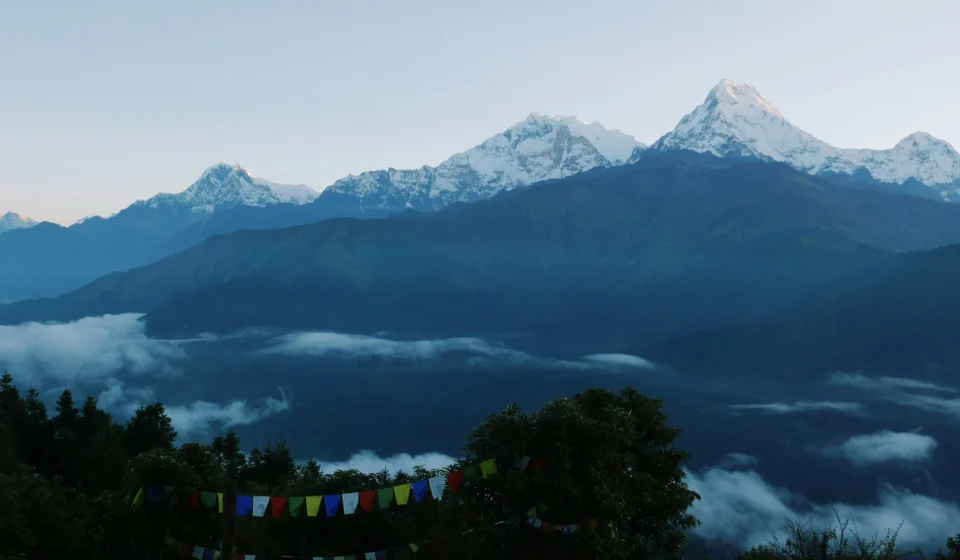
Poon Hill (3,210 m / 10,532 ft) is a viewpoint in the Annapurna region of western Nepal, reached via the Ghorepani–Poon Hill trail. It’s famous for its iconic 360-degree panorama, which includes several of the world’s highest mountains: Dhaulagiri (8,167 m), Annapurna I (8,091 m), Annapurna South (7,219 m), Machhapuchhare (Fishtail, 6,993 m), Nilgiri, and more.
The classic route runs from Nayapul (near Pokhara) through Tikhedhunga, Ulleri, Ghorepani, Poon Hill, and back via Tadapani and Ghandruk — a loop that showcases the best of the Annapurna foothills in a compact, manageable timeframe.
Trek at a Glance
- Duration: 4–5 days (classic loop)
- Distance: ~57 km (35 miles)
- Max Altitude: 3,210 m (10,532 ft) at Poon Hill
- Difficulty: Easy to Moderate
- Best Season: October–November, March–April
- Start/End Point: Nayapul (~1.5 hours by taxi from Pokhara)
- Permits Required: TIMS Card + Annapurna Conservation Area Permit (ACAP)
Why Choose the Poon Hill Trek?
1. Accessible for All Fitness Levels
Unlike the Everest Base Camp or Annapurna Circuit treks that demand weeks of dedicated training, Poon Hill is achievable by most people who maintain a basic level of fitness. The highest point is 3,210 m — well below the altitude threshold where serious acclimatisation concerns arise. That said, the 3,300+ stone steps up to Ulleri on Day 1 will give your legs a serious workout and remind you this is still a mountain trek!
2. The Sunrise from Poon Hill
The pre-dawn hike from Ghorepani to Poon Hill (around 45 minutes) is the defining moment of this trek. As the first light catches the snow-covered peaks, the sky transitions from deep purple to crimson and gold, with the Annapurna massif glowing in silhouette before blazing into full colour. Trekkers who have witnessed sunrises across the globe frequently rank this among the most spectacular they have ever seen.
3. Rhododendron Forests in Bloom
If you trek in March or April, the trail between Tikhedhunga and Ghorepani winds through dense forests of rhododendron — Nepal’s national flower — bursting in vivid shades of red, pink, and white. The combination of blooming forests and mountain views is one of the most visually stunning natural settings in the entire Himalayas.
4. Rich Cultural Immersion
The route passes through Gurung and Magar villages, offering a genuine window into traditional Himalayan life. Ghandruk in particular is one of the best-preserved Gurung villages in Nepal, with a local cultural museum, stone-paved lanes, warm community homestays, and spectacular views of Annapurna South and Machhapuchhare rising directly overhead.
Poon Hill Trek Itinerary (Classic 4-Day Route)
Day 1: Pokhara → Nayapul → Tikhedhunga (1,540 m)
Drive approximately 1.5 hours from Pokhara to Nayapul (820 m), then begin trekking through terraced farmland and riverside paths to Birethanti. After permit checks at the ACAP checkpoint, continue along the Modi River valley to Tikhedhunga. The walk is relatively gentle — a good warm-up for what comes next. Walking time: 3–4 hours. Elevation gain: ~700 m.
Day 2: Tikhedhunga → Ghorepani (2,860 m)
This is the most challenging day of the trek: you’ll climb the famous 3,300+ stone steps ascending sharply to Ulleri (1,960 m), then continue through rhododendron and oak forests via Banthanti to Ghorepani. The forest scenery is magnificent, and views of Nilgiri begin to open up as you gain altitude. Pace yourself on the steps — this is a long, steep ascent. Walking time: 5–7 hours. Elevation gain: ~1,300 m.
Day 3: Ghorepani → Poon Hill Sunrise → Tadapani (2,630 m)
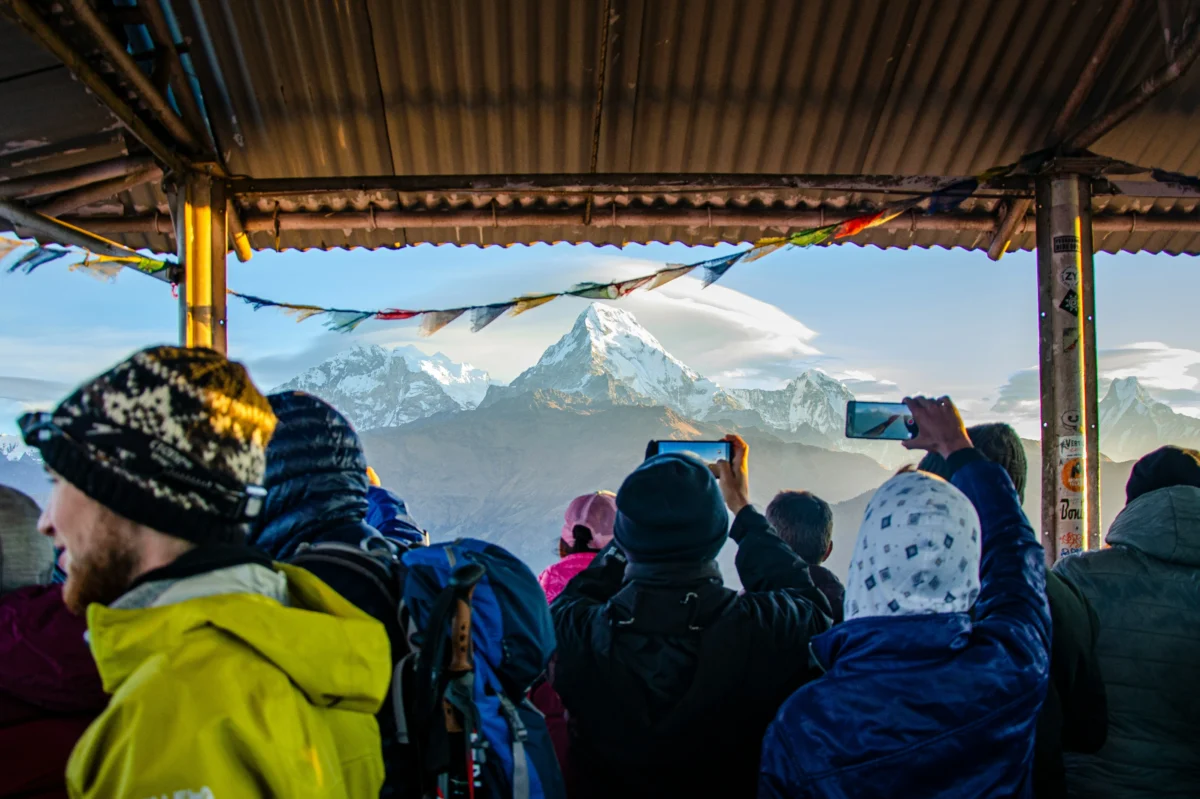
Rise at 4:30–5:00 a.m. and hike 45 minutes by headlamp to the Poon Hill viewpoint for one of the Himalayas’ most celebrated sunrises. After descending to Ghorepani for breakfast, continue through dense rhododendron forest to Deurali and then down to Tadapani, with more mountain views throughout. Walking time (full day): 6–7 hours.
Day 4: Tadapani → Ghandruk → Nayapul → Pokhara
Descend through pine forest to the gorgeous Gurung village of Ghandruk (1,940 m). Take time to explore the village and visit the Gurung Museum before trekking on to Kimche, where vehicles can be arranged back to Pokhara. Walking time: 4–5 hours.
Optional Day 5 extension: Spend an extra night in Ghandruk to explore the village at leisure, or add a detour via Jhinu Danda to soak in the natural hot springs on the Modi River — a blissful way to finish the trek.
Permits and Fees (2025–2026)
You need two permits before setting foot on the Poon Hill trail:
TIMS Card (Trekkers’ Information Management System)
- Individual trekker (no guide or agency): $20 USD
- Trekker with a guide or through a registered agency: $10 USD
Annapurna Conservation Area Permit (ACAP)
- SAARC nationals: NPR 200 (~$1.50 USD)
- All other nationalities: NPR 3,000 (~$22 USD)
Both permits can be obtained from Nepal Tourism Board offices in Kathmandu (Bhrikutimandap) or Pokhara (Damside), or through any registered trekking agency. There are multiple checkpoints on the trail, so always carry your originals — photocopies are not accepted.
How Much Does the Poon Hill Trek Cost?
Total costs vary depending on whether you trek independently or hire local support:
| Category | Estimated Cost |
|---|---|
| Budget independent (teahouse, no guide) | $30–45 per day |
| Mid-range with guide | $55–80 per day |
| Guided group tour (fully inclusive) | $400–600 total |
Typical total for a 4-day independent trek:
- Permits: ~$42 USD
- Return transport from Pokhara: ~$30–40 USD
- Accommodation: $5–10 per night
- Food at teahouses: $15–25 per day
- Total: approximately $180–280 USD
Hiring a licensed guide runs $25–35 per day; a porter $15–25 per day; a combined porter-guide $30–40 per day. For solo trekkers or those less confident in navigation, hiring a guide is genuinely worthwhile — and directly benefits the local economy.
What to Pack for Poon Hill
The Poon Hill trek doesn’t require specialist mountaineering equipment, but a few essentials make a real difference:
- Layered clothing: Temperatures at Ghorepani (2,860 m) and Poon Hill drop below freezing in winter and can be very cold even in spring and autumn — bring a warm mid-layer and a windproof outer shell
- Trekking poles: Especially valuable on Ulleri’s stone steps when descending
- Headlamp with fresh batteries: Essential for the pre-dawn Poon Hill sunrise hike
- Sun protection: SPF 50+ sunscreen, UV-blocking sunglasses, and a brimmed hat — UV radiation is intense at altitude
- Waterproof jacket and pack rain cover: Rain can arrive suddenly, particularly in shoulder seasons
- Comfortable, broken-in trekking boots with good ankle support for the stone steps
- Reusable water bottle or filter: Stay hydrated and reduce plastic waste on the trail
Best Time to Trek Poon Hill
October–November (Autumn) ⭐⭐⭐⭐⭐
The most popular season for good reason: crystal-clear skies, stable weather, and excellent mountain visibility after the monsoon has cleansed the atmosphere. Trails are busy, especially around Ghorepani, so book teahouses in advance for October.
March–April (Spring) ⭐⭐⭐⭐⭐
Rhododendrons in full bloom make this arguably the most beautiful time of year on the trail. Temperatures are slightly warmer than autumn, with a small chance of afternoon clouds building — but the forest scenery more than compensates.
December–February (Winter) ⭐⭐⭐
Cold conditions at altitude — Ghorepani can receive snowfall and temperatures can plunge to -10°C (14°F) at night. Trails are quieter and mountain views can be spectacular on clear days. Not recommended for inexperienced trekkers or those without proper cold-weather gear.
May–September (Monsoon) ⭐⭐
Heavy rainfall, leeches on the trail, and limited mountain visibility make this the least appealing season. The trail is technically open year-round, but most trekkers choose to avoid the monsoon months.
Altitude and Acclimatisation
At 3,210 m, Poon Hill is unlikely to cause serious altitude sickness in most healthy adults. Some trekkers experience mild headaches or fatigue at Ghorepani (2,860 m), particularly when ascending quickly from Pokhara (~800 m) in a single day.
Practical tips:
- Stay well hydrated — aim for 2–3 litres of water per day
- Ascend gradually; don’t try to rush the trail
- If you experience symptoms beyond a mild headache, rest at your current altitude and do not ascend further
- Carry ibuprofen or paracetamol for headaches
For comprehensive advice, see our Altitude Sickness in Nepal: Prevention, Symptoms & Treatment guide.
Guide vs. Solo Trekking on Poon Hill
The Poon Hill trail is one of Nepal’s most clearly marked and heavily trekked routes, so confident navigators can manage it solo. That said, hiring a guide offers genuine benefits beyond navigation:
- Trail-finding in poor visibility, mist, or snow conditions
- Cultural context and interpretation of villages along the route
- Emergency assistance and language help if you fall ill
- Direct income for Nepali trekking professionals
Licensed guides are available through agencies in Pokhara and can often be arranged on short notice, even for same-day departures. For a full breakdown of the pros and cons, see our Hiring a Guide vs. Solo Trekking in Nepal guide.
Teahouse Life on the Poon Hill Trek
All accommodation on this route is teahouse-style: family-run guesthouses offering simple rooms (typically twin beds with thin mattresses, a pillow, and blankets) and hearty meals. The long-standing custom is that meals are taken at the same lodge where you sleep — this is how teahouse owners make their living, and it’s a custom worth respecting.
Food is warming and filling: dal bhat (lentils and rice — unlimited refills on request!), noodle and vegetable soups, pasta, fried rice, pancakes, momos (steamed dumplings), apple pie, and plenty of hot drinks including butter tea, masala chai, and hot lemon. Expect to pay $4–12 per meal, with prices increasing slightly at higher elevations.
Wi-Fi is available at most teahouses (often for a small fee of $1–3 per day pass), and charging sockets for devices are available at most lodges, though there may be a small charge for electricity. Hot showers are available at most stops, though the definition of “hot” can vary — bucket showers or lukewarm water are common above Ulleri.
A Note on Responsible Trekking
The Annapurna region is Nepal’s most visited trekking area and faces real environmental pressures. A few practices make a difference:
- Carry a reusable water bottle and use filtered or boiled water rather than single-use plastic bottles
- Stick to established trails to prevent erosion of the hillside
- Pack out all non-biodegradable waste
- Respect local customs — dress modestly in villages, ask before photographing people
- Support locally owned teahouses rather than large commercial operations
Summary: Is Poon Hill Worth It?
Absolutely — and then some. The Poon Hill trek is the quintessential Nepal trekking experience distilled into 4–5 perfect days. From the brutal-but-rewarding stone staircase to Ulleri, through glowing rhododendron forests alive with colour, to that unforgettable Himalayan sunrise painting the peaks in crimson gold, this short trek punches dramatically above its weight.
Whether you’re a first-timer feeling your way into high-altitude trekking or a seasoned hiker after a compact Himalayan fix, Poon Hill will reward you with memories that last a lifetime. It’s no wonder this remains one of Nepal’s top-rated treks year after year.