Nepal Trekking FAQs: 30 Most Asked Questions Answered
After nineteen posts covering everything from the Everest Base Camp trail to the psychology of choosing a guide, one thing has become clear: the same questions keep coming up in our inbox, in tea houses, and in trekking forums at 2am when someone can’t sleep because of the altitude. So we’re closing out this series the way it probably should have started — with a straight-up FAQ that answers the thirty questions we get asked most often about trekking in Nepal.
Whether you’re still deciding if this is the year you finally do Everest Base Camp, or you’ve already got your flights booked and are frantically googling “do I need a sleeping bag liner,” this post is meant to be the one you bookmark. Let’s get into it.
Planning & Timing
1. When is the best time to trek in Nepal?
The two main trekking seasons are autumn (late September to November) and spring (March to May). Autumn offers the clearest skies and most stable weather of the year, which is why it’s the busiest season on every major route. Spring brings warmer days, blooming rhododendron forests below 3,500m, and slightly thinner crowds. Winter (December–February) is possible on lower routes like Poon Hill but brutally cold and often snowed-in at altitude, while the summer monsoon (June–August) turns trails to mud and clouds out the mountain views entirely — though it’s actually a decent window for rain-shadow regions like Upper Mustang.
2. How many days do I need for a Nepal trek?
It depends entirely on the route. Poon Hill can be done in 4–5 days. Everest Base Camp typically takes 12–14 days round trip from Lukla. The Annapurna Circuit runs 15–18 days depending on your start point and whether you use jeeps to skip road sections. Manaslu Circuit is usually 14–16 days, and Upper Mustang can be done in as little as 10 days flying in and out of Jomsom.
3. Do I need to be an experienced hiker to trek in Nepal?
No, but you do need reasonable cardiovascular fitness. Most tea house treks don’t require technical climbing skills — they’re long walking days on established trails and stone steps, not scrambling or rope work. The real challenge is altitude and daily distance, not technical difficulty. Routes like Poon Hill and Ghandruk are genuinely beginner-friendly; routes like the Manaslu Circuit’s Larkya La pass or Annapurna’s Thorong La (5,416m) demand more stamina and altitude tolerance.
4. How difficult is Everest Base Camp compared to other treks?
EBC is moderately difficult — not technical, but relentless. You’re walking 5–7 hours a day for up to two weeks, climbing to 5,364m at Kala Patthar (the actual EBC viewpoint most photos come from), with real risk of altitude sickness if you rush the ascent. It’s harder than Poon Hill or Ghandruk, comparable to the Annapurna Circuit, and slightly easier overall than Manaslu because the trail and tea houses are far more developed.
Permits & Money
5. What permits do I need to trek in Nepal?
Most routes require a TIMS card (Trekkers’ Information Management System) plus a National Park or Conservation Area entry permit specific to the region — for example the Sagarmatha National Park permit for Everest, or the Annapurna Conservation Area Permit (ACAP). Restricted areas like Upper Mustang, Manaslu, and parts of Dolpo require special restricted-area permits that must be arranged through a licensed agency and often cost $50–$100+ per week.
6. How much does a Nepal trek cost in total?
Budget tea house treks like Poon Hill can run as little as $25–35 a day covering food and lodging. Fully organized treks with a guide, porter, permits, and domestic flights (like EBC) typically land between $1,200 and $2,500 for two weeks depending on comfort level. Restricted-area treks like Upper Mustang or Manaslu cost more — often $1,800–$3,500 — because of permit fees and the need for a licensed guide.
7. Do I need travel insurance?
Yes, and not the basic kind. You need insurance that specifically covers high-altitude trekking and helicopter evacuation, usually up to 6,000m for most routes. Standard travel insurance policies often exclude altitude-related rescues, so check the fine print before you fly.
8. Can I use credit cards on the trail?
Rarely, and never rely on it. Once you’re a day or two past the trailhead, it’s cash only, and prices climb the higher and more remote you go — a bottle of water that costs $0.50 in Kathmandu can cost $3–4 near Everest Base Camp. Carry more Nepali rupees than you think you’ll need; ATMs disappear after the first day or two on most routes.
Health & Safety
9. What is altitude sickness and how serious is it?
Altitude sickness (acute mountain sickness, or AMS) happens when you ascend faster than your body can adapt to thinner air, typically above 2,500–3,000m. Mild symptoms include headache, nausea, and fatigue; severe cases (HAPE or HACE) can be fatal within hours if untreated. The single best prevention is a slow ascent rate — no more than 300–500m of net altitude gain per day above 3,000m, with a rest day every 3–4 days.
10. Do I need Diamox?
Diamox (acetazolamide) is widely used as a preventive measure and is available over the counter in Kathmandu pharmacies, but it’s not a substitute for acclimatization days. Many trekkers start a low dose a day before crossing 3,000m. Talk to a travel doctor before you go, since it’s not suitable for everyone (including those with sulfa allergies).
11. Is it safe to trek alone in Nepal, especially as a woman?
Nepal is generally considered one of the safer countries in Asia for solo female travelers, and solo trekking on well-trafficked routes like EBC or Annapurna is common. That said, a licensed guide adds a real safety margin on quieter trails, helps navigate language barriers in remote villages, and can make a big difference if altitude sickness or an injury strikes far from the nearest clinic.
12. What happens in a medical emergency on the trail?
On popular routes, most villages have basic first-aid posts, and larger hubs (Namche Bazaar, Manang) have proper clinics. For serious cases, helicopter evacuation is available on nearly every major route, provided you have insurance that covers it — which is exactly why that insurance question above matters so much.
Gear & Packing
13. What’s the one piece of gear people always forget?
A good sleeping bag liner or a sleeping bag rated well below what they think they need. Tea houses above 3,500m are unheated, and nighttime temperatures regularly drop below freezing even in the “warm” trekking seasons.
14. Do I need to buy all my gear before arriving?
No — Kathmandu’s Thamel district has dozens of gear shops selling both genuine and convincing knockoff brands at a fraction of home-country prices. Down jackets, trekking poles, and sleeping bags can all be bought or rented on arrival, which is a popular budget-saving move for one-time trekkers.
15. How heavy should my pack be?
If you’re hiring a porter (highly recommended and inexpensive at roughly $15–20/day), your day pack should carry only water, snacks, a layer, and camera gear — 3–5kg. Porters typically carry up to 15–20kg of your main luggage between two trekkers.
Guides, Tea Houses & Logistics
16. Do I really need a guide?
For restricted areas (Upper Mustang, Manaslu, parts of Dolpo) a licensed guide is legally required. For open routes like EBC or Annapurna, it’s optional but strongly recommended for first-timers — a good guide handles permits, navigation, altitude monitoring, and communication with tea house owners.
17. What is a tea house, exactly?
Tea houses are family-run guesthouses along the trekking routes offering a bed (usually a simple twin room with shared bathroom) and meals. They’re the backbone of Nepal’s trekking infrastructure and mean you don’t need to carry camping gear on most routes.
18. What food is available on the trail?
Dal bhat (lentils, rice, and vegetable curry) is the trekking staple — filling, usually available with free refills, and a reliable source of carbs for long days. Most tea houses also serve pasta, fried rice, soup, and basic breakfast items, though menus get simpler and pricier the higher you climb.
19. Will I have phone signal or WiFi?
Most tea houses on major routes offer paid WiFi (often through the Everest Link network on the EBC trail), and Nepali SIM cards with data get partial signal in many villages. Don’t expect reliability above 4,000m, and treat any connectivity as a bonus, not a given.
20. Can I charge my electronics on the trail?
Yes, for a small per-hour fee at most tea houses, though solar charging or a power bank is worth carrying as backup, especially on quieter routes like Upper Mustang or Manaslu where electricity is less consistent.
Specific Trek Questions
21. Which trek has the best views for the least effort?
Poon Hill is the classic answer — a short, well-graded trek culminating in a sunrise viewpoint over the Annapurna and Dhaulagiri ranges, doable in under a week.
22. Is the Annapurna Circuit still worth doing given the road construction?
Yes, though road development has changed its character. Many trekkers now jeep past the lower, road-affected sections and focus on the high alpine stretch around Manang and Thorong La, which remains spectacular and largely untouched by vehicle traffic.
23. What’s the difference between Everest Base Camp and Gokyo Lakes?
Both start from Lukla, but Gokyo trades the crowded EBC trail for turquoise glacial lakes and arguably better mountain panoramas from Gokyo Ri, with noticeably fewer trekkers on the trail.
24. Is Manaslu as good as everyone says?
Manaslu Circuit is often described as “what Annapurna used to be” — remote, culturally rich, and far less crowded, crossing the demanding Larkya La pass at 5,106m. It requires a special permit and a guide, which keeps numbers low.
25. What makes Upper Mustang different from other treks?
Upper Mustang is a high desert landscape culturally tied to Tibet rather than the lush, forested trails elsewhere in Nepal. It’s drier, so it’s trekkable even during the summer monsoon when most other regions are washed out.
Practical Odds & Ends
26. Do I need a visa to trek in Nepal?
Most nationalities can get a Nepal visa on arrival at Kathmandu airport or land borders, valid from 15 to 90 days depending on the fee paid.
27. What vaccinations do I need?
None are strictly mandatory for entry, but hepatitis A and typhoid are commonly recommended, along with being up to date on routine vaccines. Check with a travel clinic 4–6 weeks before departure.
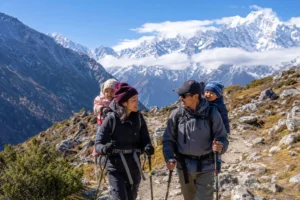
28. Can I trek with children?
Yes, on lower-altitude, shorter routes with a conservative pace and close monitoring for altitude symptoms. High passes above 5,000m are generally not advisable for young children.
29. How do I train for a trek before I arrive?
Focus on cardio endurance (stair climbing, hiking with a loaded pack, running) for at least 8–12 weeks before departure, plus leg strength work. Fitness matters more than any single piece of gear.
30. What’s the most common regret trekkers have afterward?
Moving too fast. Nearly every account of a trek cut short or turned miserable by altitude sickness traces back to skipping acclimatization days to save time. Build in the rest days — you’ll be glad you did at 4,500m.
Final Thoughts
Thirty questions barely scratches the surface of what you’ll actually learn on the trail, but it should cover the anxieties that keep first-time trekkers up at night before their flight to Kathmandu. The short version: pick a route that matches your fitness and time budget, respect the altitude, budget more cash than you think you need, and get insurance that actually covers a helicopter ride home if it comes to that.