Nepal Trekking Costs & Budget Guide (2025–2026)
A no-frills teahouse trek through the Annapurna foothills can cost less than a weekend in a mid-range hotel back home, while a fully guided Everest Base Camp expedition with private transfers and a luxury lodge finish can run into the thousands. The difference comes down to a handful of variables you can plan around: which region you trek in, how long you’re on the trail, whether you hire a guide or porter, and how much comfort you want at the end of a long day of walking.
This guide breaks down every real cost you’ll encounter trekking in Nepal in 2025–2026, from permits and flights to teahouse dal bhat and trail-side Wi-Fi, so you can build a budget that actually matches the trip you want to take.
What Determines Your Trekking Budget in Nepal
Region and Trek Length
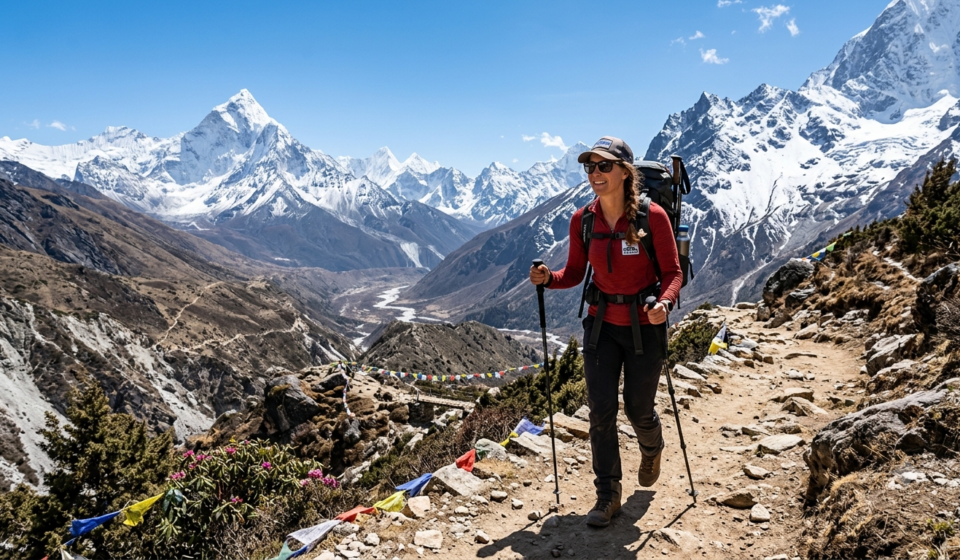
Nepal’s most popular treks vary enormously in length and remoteness, and both drive cost. The Everest Base Camp trek covers roughly 130 km (80 miles) round trip and takes 12–14 days, reaching a maximum altitude of 5,364 m at Kala Patthar. The Annapurna Circuit runs 160–230 km depending on your start and end points, takes 15–20 days, and crosses the 5,416 m Thorong La pass. Shorter treks like Poon Hill (around 4 days, max altitude 3,210 m, rated easy-to-moderate) or Langtang Valley (about 65 km, 7–10 days, moderate difficulty) cost proportionally less simply because you’re paying for fewer days on the trail and fewer flights.
Trekking Permits and Fees
Nepal requires different permits depending on the region:
TIMS (Trekkers’ Information Management System) card: around $20 for independent trekkers, required for most non-restricted areas.
Sagarmatha National Park entry permit (Everest region): approximately $30.
Khumbu Pasang Lhamu Rural Municipality fee (Everest region): approximately $20.
Annapurna Conservation Area Permit (ACAP): approximately $30.
Restricted area permits (Upper Mustang, Manaslu, parts of Dolpo): these are significantly higher, often $75–100 per week per person, and require trekking with a licensed guide.
Permit fees are generally paid once, in cash or by card, at permit checkpoints or in Kathmandu/Pokhara before you set out. For the current full list of fees and required documents, see our Nepal Trekking Permits: The Complete 2025–2026 Guide.
Guide and Porter Costs
A licensed guide typically costs $25–35 per day, and a porter (who can carry up to 15–20 kg of your gear) costs $20–25 per day. Many trekkers hire a combined guide-porter for around $30–40 per day. Hiring locally through a trekking agency in Kathmandu or Pokhara is usually cheaper than booking through an international operator, though it requires a bit more legwork and Nepali-language trust-building. Restricted areas legally require a licensed guide, which should be factored into your budget from the start.
Daily Costs on the Trail
Teahouse Accommodation
Teahouse lodges are the backbone of independent trekking in Nepal, and their pricing model is unusual: rooms themselves are often just $3–10 per night, sometimes even free, because lodge owners expect you to eat your meals there. On popular routes like EBC and Annapurna in peak season, expect to pay toward the higher end or occasionally more for rooms with attached bathrooms. For a full rundown of what a typical teahouse stay involves, see our Tea House Trekking in Nepal: What to Expect.
Food and Drinks
Food is usually your biggest daily expense on the trail, and prices climb with altitude since everything has to be carried in by porter or yak. Budget roughly:
Dal bhat (rice, lentils, vegetables, often with unlimited refills): $5–8.
Breakfast (porridge, eggs, pancakes): $3–6.
Noodles or fried rice: $4–7.
Black tea or coffee: $1–3.
Bottled or boiled water: $1–4, rising sharply at higher elevations.
Most trekkers spend $20–35 per day on food alone at higher elevations. Ordering dal bhat is both the cultural and budget-savvy choice, since refills are included and it’s the most calorie-dense option on most menus.
Extras: Charging, Wi-Fi, Hot Showers
These small extras add up faster than most first-time trekkers expect: phone/battery charging ($2–5 per device), Wi-Fi access ($2–5 per day, often via Everest Link or NCell cards), and hot showers ($2–6, sometimes bucket-only at higher altitudes). Budgeting an extra $5–10 per day for these comforts is realistic if you want to stay connected and reasonably clean.
Pre-Trek Costs
Flights to Nepal
International flights into Kathmandu (Tribhuvan International Airport) vary widely by origin and season, typically ranging from $600 to $1,500+ round trip from North America or Europe, and somewhat less from other parts of Asia. Booking 2–3 months ahead and avoiding the October–November and March–April peak trekking seasons can meaningfully reduce fares.
Domestic Flights
Many treks require a domestic flight, most famously the Kathmandu–Lukla route for Everest region treks, which costs around $180–220 each way and is notoriously weather-dependent, so build a buffer day or two into your itinerary in case of delays. Flights to Pokhara for the Annapurna region are cheaper, typically $100–140 each way, and far more reliable.
Gear and Packing
If you’re starting from scratch, a full trekking kit (boots, layers, sleeping bag, poles, pack) can cost $300–800 depending on quality and how much you already own. Kathmandu’s Thamel district has a huge market for both genuine and replica gear at a fraction of home-country prices, and gear rental (sleeping bags, down jackets) is widely available for $1–3 per item per day.
Travel Insurance
Do not skip this. Insurance covering trekking up to your maximum planned altitude, including helicopter evacuation, typically costs $50–150 for a two-to-three-week trip, and is one of the few line items where cutting corners can be genuinely dangerous, especially given the risk of altitude sickness at elevations above 3,000 m. See our guide on Altitude Sickness in Nepal: Prevention, Symptoms & Treatment for why evacuation coverage matters.
Sample Budgets by Style
Budget/independent trekker (no guide, teahouses, local food): $25–40 per day on the trail. A 12-day EBC trek run this way, excluding flights to Nepal, lands around $700–1,000 including permits, Lukla flights, and a porter.
Mid-range (guide and/or porter, teahouses, occasional treats): $50–80 per day on the trail. The same EBC trek with a guide and porter typically runs $1,200–1,800 all-in.
Fully guided package (agency-booked, all meals/permits/transport included): $150+ per day, often sold as a fixed package of $1,500–2,500 for EBC or $900–1,500 for the Annapurna Circuit, with everything handled for you.
Money-Saving Tips
Trek in shoulder season (late November or early spring before the March rush) for lower lodge and flight prices and thinner crowds. Bring a water purifier (tablets or a filter) rather than buying bottled water every day — this alone can save $30–50 over a two-week trek. Choose set breakfasts and dal bhat over à la carte items, which are usually marked up. Hire your guide or porter directly through a local agency rather than a foreign-based operator to cut out the middleman markup. Finally, pack layers you already own rather than buying a full new kit — Nepal’s gear shops are there for what you’re missing, not for a full wardrobe replacement.
A Note on Tipping
Tipping is expected, not optional, for guides and porters, and is usually handled as a lump sum at the end of the trek rather than daily. A common guideline is 10–15% of the total guide/porter cost, split among the team if you have more than one crew member. Budget roughly $100–150 per trekker for a two-week trek with a guide and porter.
Summary
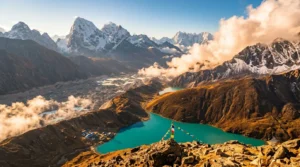
Nepal can be trekked on a shoestring or in real comfort, and the honest answer to “how much does it cost” is: it depends entirely on the choices above. Build your budget around your region, trek length, and comfort level first, then pad it by 15–20% for weather delays, extra snacks, and the inevitable souvenir or two in Thamel on your way home. However you choose to trek, the mountains don’t care about your budget tier — the views from Kala Patthar or Thorong La are the same whether you walked in on $25 a day or $150.