Best Time to Trek in Nepal: Month-by-Month Breakdown
One question lands in our inbox more than almost any other: “When is the best time to trek in Nepal?” It’s a fair question, because Nepal isn’t a single climate — it’s a stack of them. In the space of a two-week trek you can move through subtropical rice terraces, rhododendron forests, alpine meadows, and glaciated high passes above 5,000 meters. Timing your trip right can mean the difference between crystal-clear mountain panoramas and a week of staring into grey cloud.
This guide breaks Nepal’s trekking calendar down season by season and month by month, so you can match your dates to the trek you actually want to do.
Nepal’s weather patterns are shaped largely by two forces: the summer monsoon rolling up from the Bay of Bengal, and the rain-shadow effect cast by the Himalayan range itself. Understanding which side of that shadow your chosen trek sits on is often more useful than memorizing a generic “best season” — it’s why a trek like Everest Base Camp and a trek like Upper Mustang can have almost opposite ideal windows despite both being in the same country.
Elevation matters just as much as season. A trek that stays below 3,000m, such as Poon Hill or the lower Annapurna foothills, is far more forgiving of off-season weather than a high-altitude crossing like the Thorong La or Larkya La, where a poorly timed snowstorm can close the route for days.
Nepal’s Four Trekking Seasons
Nepal’s trekking year splits into four broad seasons, each with a very different offerings.
Autumn (late September to November) — The Gold Standard
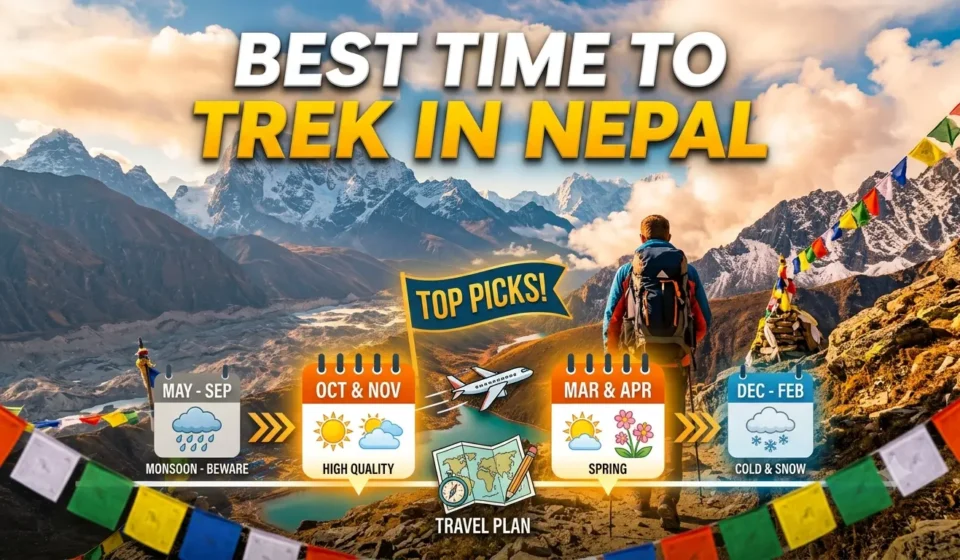
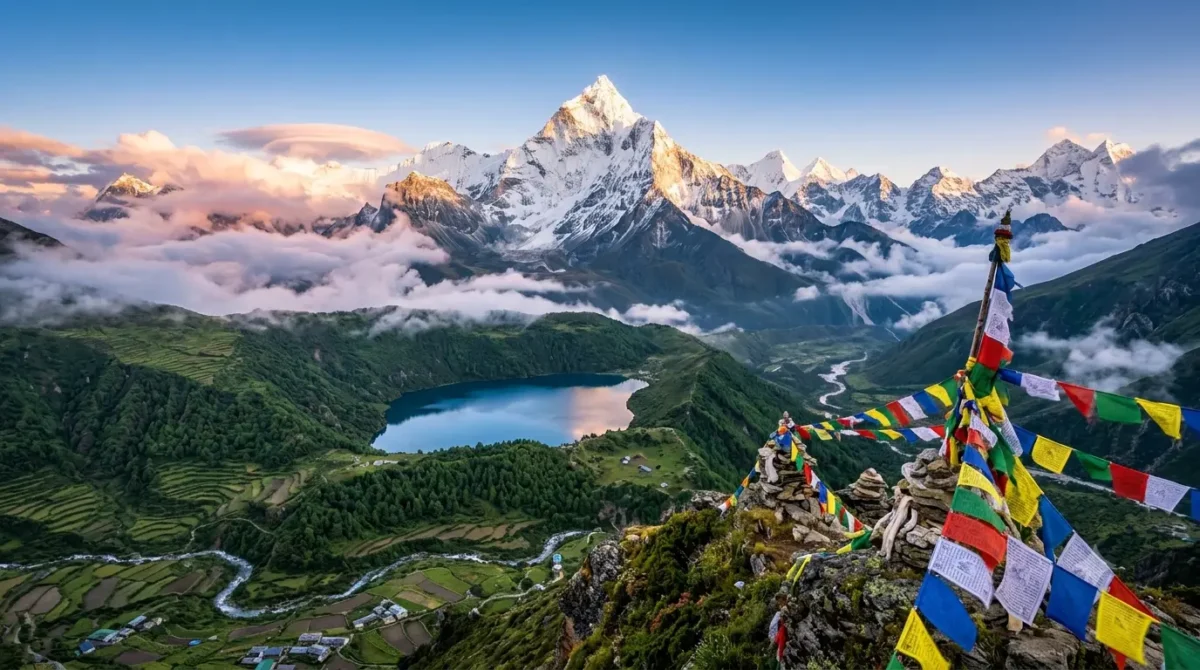
Autumn is Nepal’s most popular trekking season, and for good reason. The monsoon rains have just washed the dust out of the sky, leaving some of the clearest, longest mountain views of the year. Daytime temperatures at lower elevations sit around 20–25°C, dropping to well below freezing above 4,000m at night. Trails are busy — this is peak season on routes like Everest Base Camp and the Annapurna Circuit — but the stable weather and post-monsoon greenery make it worth sharing the trail.
Winter (December to February) — Cold, Clear, and Quiet
Winter brings sharp, dry air and some of the most dramatic mountain visibility of the year, especially in December before the deepest cold sets in. High passes (Thorong La on the Annapurna Circuit, the Renjo La near Gokyo) can close temporarily after snowfall, and teahouses at altitude get bitterly cold at night, often below -15°C. Winter rewards trekkers who are prepared for the cold with near-empty trails and rock-bottom lodge prices. Lower-altitude treks like Poon Hill or Ghandruk are excellent winter options.
Spring (March to May) — Nepal’s Second Season
Spring is autumn’s closest rival. March and April bring Nepal’s famous rhododendron blooms, painting entire hillsides red and pink, particularly around Poon Hill and the lower Annapurna region. Temperatures are milder than autumn at altitude, though afternoon haze can soften long-distance mountain views compared to the crisp clarity of October. This is the primary climbing season for Everest, so Base Camp trails carry extra energy (and extra foot traffic) in April and May.
Monsoon / Summer (June to August) — Wet, but Not Written Off
Monsoon rains drench most of Nepal from June through August, turning trails muddy and obscuring views with cloud most afternoons. Leeches are a genuine (if minor) nuisance below 3,000m. However, this is where geography saves the day: treks in the Himalayan rain shadow — Upper Mustang, Manaslu’s northern reaches, and Nar Phu — sit north of the main range and stay largely dry even at the height of monsoon, making summer a legitimately good time to visit these specific regions.
Month-by-Month Breakdown
January: Cold and clear at altitude, quiet trails, best for lower treks like Poon Hill; high passes risk snow closure.
February: Similar to January with slightly warmer daytime temperatures; still a strong low-altitude option.
March: Rhododendrons begin blooming; spring season opens; increasing trail traffic.
April: Peak spring — best rhododendron displays, Everest climbing season begins, busy on EBC and Annapurna routes.
May: Warmer, hazier afternoons; still good for high-altitude treks before monsoon arrives.
June: Monsoon begins in earnest for most of Nepal; good window for Upper Mustang and other rain-shadow treks.
July: Peak monsoon — heavy rain, leeches, landslide risk on some roads; rain-shadow routes remain viable.
August: Monsoon continues; same guidance as July.
September: Monsoon tapers off through the month; late September marks the start of the autumn rush.
October: Nepal’s single most popular trekking month — stable weather, maximum visibility, busiest teahouses and trails.
November: Still excellent autumn conditions, cooling nights, slightly thinner crowds than October.
December: Early winter — clear skies, sharp cold, good for lower-elevation treks and trekkers who prefer solitude.
Best Season by Popular Trek
Different routes reward different timing:
Everest Base Camp Trek: Autumn (Oct–Nov) or spring (Mar–May) for the classic experience and safest passage over the Kongma La, Cho La, or Renjo La if combining with the Three Passes route.
Annapurna Circuit Trek: Autumn and spring, avoiding monsoon landslide risk on the lower, road-affected sections and winter snow at Thorong La (5,416m).
Poon Hill Trek: Nearly year-round thanks to its modest elevation (around 3,210m at the viewpoint), but spring rhododendrons and autumn clarity are the standout windows.
Manaslu Circuit Trek: Autumn and spring for the Larkya La crossing (5,106m); the trek’s more sheltered northern stretch also takes early monsoon reasonably well.
Upper Mustang Trek: Genuinely one of the best monsoon-season treks in Nepal, since it sits in the Annapurna rain shadow — June through August works well here when the rest of the country is soaked.
Practical Planning Tips
A few things worth knowing as you pick your dates:
Book flights and permits early for peak months. October, November, and April fill up fast — flights to Lukla in particular get booked out weeks ahead, and popular teahouses can fill up in the busiest villages.
Costs shift with the seasons. Peak autumn and spring trekking typically runs $30–$50 per day for teahouse-based independent trekking (lodging, meals, incidentals), while winter and monsoon can trim daily costs by 10–20% thanks to lower demand and occasional negotiating room on rooms.
Pack for temperature swings, not just season. Even in warm autumn, nights above 4,000m regularly drop below freezing — layering matters more than which month you’ve picked.
Check permit and pass conditions before departure. Winter snow can close high passes with little notice; always have a fallback itinerary or buffer days built in.
Watch out for festival season. Dashain and Tihar, Nepal’s two biggest festivals, usually fall in September and October or November depending on the lunar calendar. Domestic flights and buses get heavily booked around these dates as Nepalis travel home, so factor that into your Lukla or Pokhara flight planning if your trip overlaps.
Season affects acclimatization strategy, not just comfort. Colder months mean drier air, which can make dehydration and the early symptoms of altitude sickness easier to overlook. Whatever month you trek, stick to a conservative ascent profile above 3,000m and build in acclimatization days regardless of how good the weather looks.
Frequently Asked Questions
Is October or November better for the Everest Base Camp Trek? Both are excellent, but October tends to have slightly warmer daytime temperatures and a livelier trail atmosphere post-monsoon, while November offers marginally thinner crowds and colder, crisper mornings — a small trade-off either way.
Can you trek in Nepal during monsoon season? Yes, but choose your region carefully. Routes on the main Himalayan front (EBC, standard Annapurna) get the worst of the rain, while rain-shadow treks like Upper Mustang stay comparatively dry and are genuinely recommended for a June–August trip.
Does trekking in winter require special gear? A good down jacket rated for at least -15°C, a four-season sleeping bag liner, and quality insulated boots are essential above 3,000m in December through February. Many teahouses have limited heating, so cold-weather layering is non-negotiable.
How far in advance should I book a peak-season trek? For October, November, or April departures, aim to book domestic flights (especially Lukla) and arrange permits at least 4–8 weeks ahead, longer if you’re traveling around major Nepali festivals like Dashain or Tihar.
Other updates regarding travelling in Nepal can be found here
Conclusion
There’s no single “best” month to trek in Nepal — there’s a best month for the specific trek and experience you’re after. If you want the classic postcard views and don’t mind company on the trail, aim for October or November. If blooming rhododendrons and milder nights sound better, April is hard to beat. If you crave solitude and can handle the cold, winter delivers stunning clarity on lower routes. And if your travel dates are locked into summer, don’t cancel your trip — just point it toward Upper Mustang instead of Everest. Nepal has a season, and a trail, for almost every calendar.
Whatever month you choose, the fundamentals stay the same: pack for temperatures colder than you expect, build acclimatization days into your itinerary, buy travel insurance that covers high-altitude trekking and helicopter evacuation, and book your permits and flights early if you’re traveling in a peak window. Get those basics right, and the calendar becomes a detail to plan around rather than an obstacle.