Annapurna Circuit Trek: The Complete Guide for 2026 (Cost, Itinerary, Difficulty & Permits)
The Annapurna Circuit is not just a trek. It is a masterclass in how dramatically the Himalayas can change in two weeks.
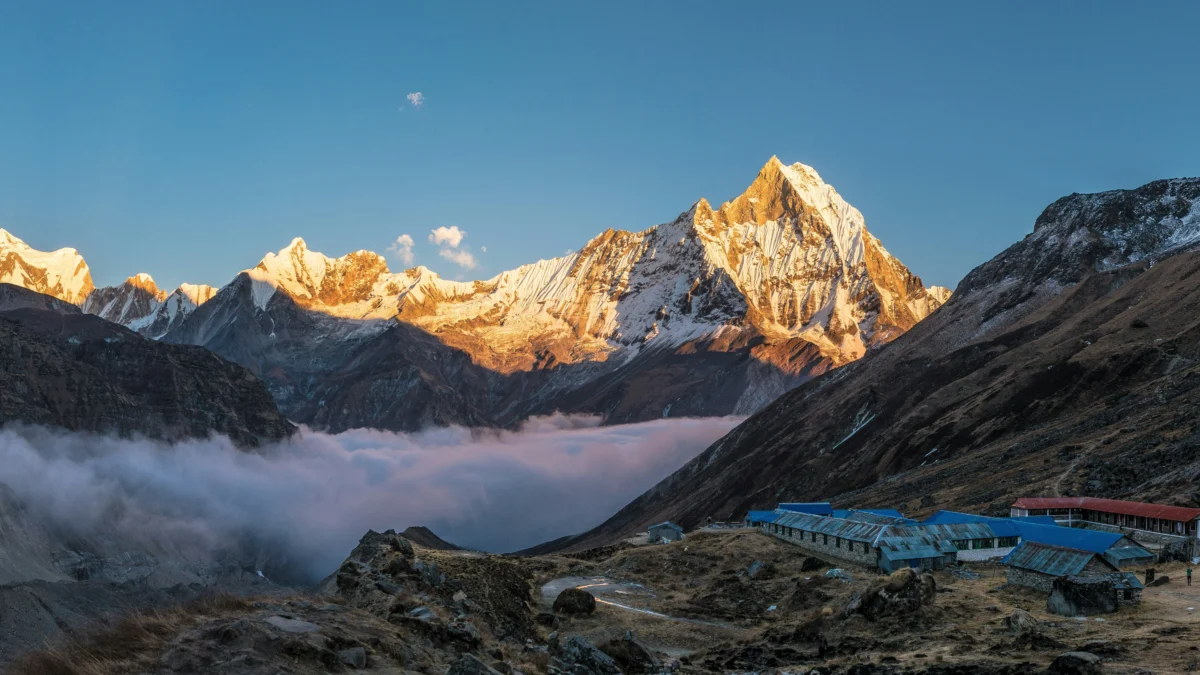
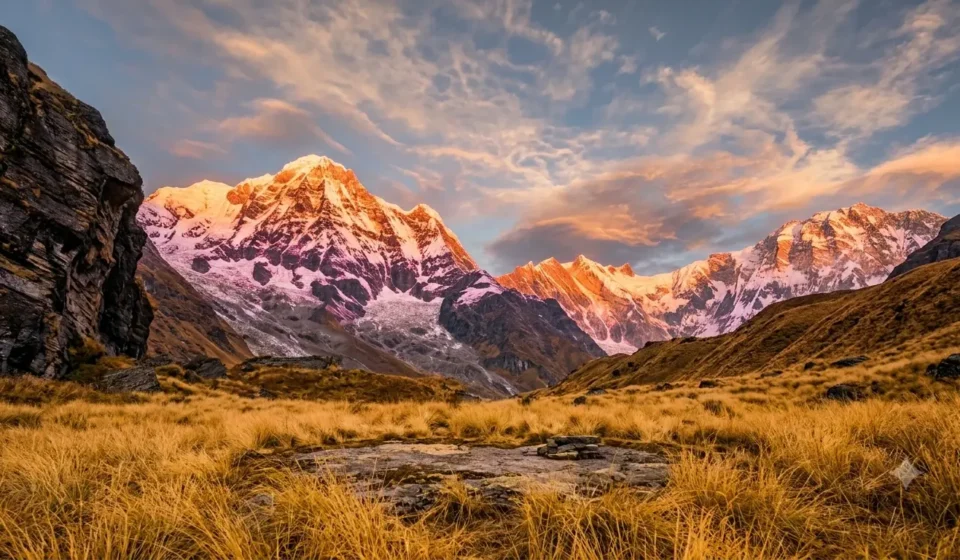
In fourteen days, you walk from subtropical rice paddies at 800 meters into a Tibetan high-altitude desert at 5,000 meters. You pass through Hindu villages, Buddhist monasteries, and Tibetan trading towns that feel untouched by the outside world. You cross the Thorong La Pass — one of the highest trekking passes on Earth — at 5,416 meters. And you end in Pokhara, one of Nepal’s most beautiful cities, with the entire Annapurna massif framed in the reflection of Phewa Lake.
The Annapurna Circuit Trek circles the Annapurna massif and spans 160 to 230 kilometers, depending on route changes, encountering Tibetan plateau deserts, alpine meadows, and subtropical forests along the way.
This is the most complete Annapurna Circuit guide published for 2026. It covers cost, itinerary, permits, difficulty, best time to go, cultural highlights, and the one upgrade most trekkers wish they had planned for from the start.
The short answer on cost: A standard guided 14-day Annapurna Circuit trek costs $900 to $1,800 per person through a Kathmandu-based agency (good research recommended). Your all-in budget from Kathmandu — including permits, insurance, tips, gear, and trail extras — lands between $1,400 and $2,500 for most international trekkers.
Quick Reference: Annapurna Circuit Trek at a Glance
| Detail | Information |
|---|---|
| Trek distance | 160 – 230 km (varies by route) |
| Trek duration | 12 – 18 days (14 days is standard) |
| Highest point | Thorong La Pass — 5,416 m |
| Difficulty | Moderate to Challenging |
| Best seasons | Spring (Mar–May) · Autumn (Sep–Nov) |
| Starting point | Besisahar or Dharapani (from Kathmandu) |
| Ending point | Pokhara (via Jomsom or Nayapul) |
| Required permits | ACAP permit (TIMS not enforced in 2026) |
| Guide required? | Yes — mandatory under 2026 Nepal regulations |
| Package cost | $900 – $1,800 (standard guided) |
| All-in budget | $1,400 – $2,500 (from Kathmandu) |
What Makes the Annapurna Circuit Different From Every Other Trek in Nepal (or in the World)
The Annapurna Circuit is the most diverse long-distance trek in the world. That is not marketing language — it is a geographical fact.
The journey begins at the traditional trailhead and follows the Marsyangdi River through forested valleys and mountain villages such as Chame and Upper Pisang, gradually revealing towering peaks of the Annapurna range. As the route climbs higher, the landscape opens into wide alpine terrain with strong Tibetan cultural influence.
No other trek of comparable length compresses this much landscape variety into a single continuous route. In the space of two weeks, you cross climate zones that span the entire height of the Himalayas — from subtropical jungle to arctic high-altitude desert — while passing through communities representing more than a dozen distinct ethnic and cultural groups.
Along the way, trekkers come across several ethnic populations in the area, such as the Thakali, Tibetan, and Gurung people, while enjoying views of peaks like Annapurna, Dhaulagiri, and Machhapuchhre.
This diversity is what separates the Annapurna Circuit from the Everest Base Camp trek. EBC delivers iconic mountain views and powerful Sherpa culture. The Circuit delivers all of that plus cultural variety, landscape transformation, and the rewarding complexity of a true circumnavigation.
Annapurna Circuit Trek Difficulty: What to Realistically Expect
The Annapurna Circuit trek is rated moderate to challenging. That rating is accurate — but the reasons behind it matter more than the label.
The trek is considered moderate to challenging mainly due to its high altitude, long duration, and diverse terrain. While it does not require technical climbing skills, it demands good physical fitness, endurance, and proper acclimatization.
What Makes It Hard
Daily walking hours. The trek involves walking six to seven hours a day for about fifteen to twenty days over steep, rough terrain and at high altitudes, which can be physically demanding. People who regularly exercise cardio, like running, swimming, or cycling, will likely be better prepared.
Thorong La Pass. The most difficult part of the trek is crossing Thorong La Pass, one of the highest trekking passes in the world. Proper acclimatization in Manang is crucial before attempting the pass. The pass day itself requires a pre-dawn start — most trekkers leave High Camp between 3:00 and 5:00 AM — and involves four to five hours of continuous ascent before the descent to Muktinath.
Altitude sickness risk. Altitude sickness presents a significant danger at Thorong La Pass in particular, where the climb ascends over 5,000 meters, necessitating cautious acclimatization.
Unpredictable weather. Abrupt weather changes, particularly at higher altitudes, can result in freezing temperatures, heavy rain, or snow, which can make the trek hazardous and challenging.
What Makes It Achievable
The Annapurna Circuit does not require technical climbing experience, ropes, or crampon skills. Prior trekking experience is a plus, but the Annapurna Circuit does not restrict beginners from enjoying the experience. With proper preparation and comprehensive training, the trek is doable for people with little to no prior experience.
The trail is well-marked throughout, teahouses are available at every major stop, and the gradual ascent profile — when followed correctly — gives your body the time it needs to adapt to altitude.
Fitness recommendation: If you can hike for six hours with a daypack without significant difficulty, and you have no history of altitude sickness, you are a viable candidate for the Annapurna Circuit. Begin a cardio-focused training program three to four months before departure — running, stair climbing, and loaded hiking are the most effective preparation.
Annapurna Circuit Trek Cost 2026: Complete Breakdown
For a standard 12 to 14-day trek, the Annapurna Circuit cost in 2026 is generally set at $900 to $1,800 per person through a package, excluding international transfer to Nepal. What it covers is the permits, meals during the trek, lodging, and staff fees.
Here is the full line-by-line breakdown of every cost you will encounter.
1. The Trekking Package
| Package Tier | Package Cost | What’s Included |
|---|---|---|
| Budget | $900 – $1,200 | Licensed guide, porter (shared), basic teahouse, meals, ACAP permit |
| Standard | $1,200 – $1,800 | Private/twin rooms where available, senior guide, full logistics |
| Premium | $2,000 – $3,000 | Smaller groups, private guide, better teahouses, flexible itinerary |
| Luxury | $3,000 – $4,500+ | Best lodges, private guide and porter, airport transfers, upgrades |
Book through a TAAN-certified Kathmandu-based agency. The same trek arranged through a Western international operator typically costs 40 to 80% more for an identical experience on the trail.
2. Permits
The permit situation on the Annapurna Circuit changed meaningfully in 2026 and a lot of online information is still outdated. Here is the accurate picture.
ACAP Permit (Annapurna Conservation Area Permit) — MANDATORY
The ACAP is issued by the National Trust for Nature Conservation (NTNC), funds conservation, community development, and trail maintenance, and costs NPR 3,000 for foreign nationals and NPR 1,000 for SAARC nationals. Children under 10 do not need a permit. At the current exchange rate, NPR 3,000 is approximately $22 USD.
The ACAP permit is completely mandatory and strictly enforced. Lack of an ACAP permit generally results in denied entry into the region, fines, or being turned back at checkpoints.
TIMS Card — NOT ENFORCED IN 2026
This is the most important permit update for Annapurna trekkers in 2026. TIMS is not enforced on Annapurna trails. Although TIMS still appears in older regulations and some online sources, it is not checked on-site. Checkpoints across the Annapurna region verify only the ACAP permit.
Many blogs still list both TIMS and ACAP as required. Do not pay for a TIMS card for the Annapurna Circuit — it is an unnecessary expense in 2026.
Total permit cost: ~$22 USD per person (ACAP only)
3. Guide — Now Mandatory
In 2026, guide fees in Nepal are no longer just a budget choice. Trekking without a licensed guide is prohibited in major regions, including the Annapurna Circuit. The Nepal Tourism Board created the rule to ensure hiker safety and local employment.
With the updated rules in 2026, trekking without a licensed guide is prohibited for trekkers venturing to high altitudes of 3,500 to 5,500 meters and above.
A licensed guide costs $25 to $40 USD per day. In a package, this is bundled in. If arranging independently, also budget $10 to $20 per day to cover the guide’s accommodation and meals on the trail.
4. Porter
One porter typically carries gear for two trekkers up to a maximum of 25 kg. Porter cost: $20 to $30 USD per day, plus food and accommodation.
For a 14-day circuit, a shared porter arrangement adds roughly $350 to $600 per trekker when arranged through a quality agency. Most standard packages include one porter per two trekkers.
5. Daily Trail Expenses (Food, Water, Accommodation, Extras)
The budget for a standard trekker in 2026 is between $35 and $50 USD per day, covering hearty meals and a few snacks along with the luxury of ginger lemon honey tea or a slice of apple pie.
Daily expenses of $15 to $20 per person per day should be sufficient on the trail itself once accommodation and meals from the package are accounted for. In Kathmandu or Pokhara, $20 to $30 per day should be sufficient.
Key altitude price increases to budget for:
- Dal bhat: $6 at lower elevations → up to $12 near Thorong La
- Bottled water: $1 to $2 at lower stops → $4 near the pass
- Hot shower: $3 to $5 throughout
- Wi-Fi: $2 to $5 per session (Starlink now available at most major stops)
- Device charging: $2 to $4 per device
Carry 20% more cash than your budget estimate. There are no ATMs after Besisahar or Chame. Withdraw enough Nepali Rupees in Kathmandu or Pokhara before the trek begins.
6. Travel Insurance
Non-negotiable. A helicopter evacuation from altitude on the Annapurna Circuit costs $4,000 to $10,000 without insurance. A policy covering helicopter rescue to 6,000 meters costs $80 to $200.
Your policy must cover: helicopter evacuation to at least 6,000 m, emergency medical treatment, trip interruption, and Lukla-equivalent flight delays.
7. Tips
Tips are expected and form an important part of your guide’s and porter’s income.
- Guide: $15 to $20 per day ($210 to $280 for 14 days)
- Porter: $10 to $15 per day ($140 to $210 for 14 days)
Present tips in cash at the end of the trek.
All-In Budget Summary
| Trekker Type | Package | Extras (Insurance, Tips, Gear, Trail) | Total (from Kathmandu) |
|---|---|---|---|
| Budget group trekker | $1,000 | $400 | ~$1,400 |
| Standard guided trekker | $1,500 | $600 | ~$2,100 |
| Solo premium trekker | $2,200 | $700 | ~$2,900 |
| Luxury trekker | $4,000 | $800 | ~$4,800 |
International flights to Kathmandu ($700 to $1,800) are not included.
Annapurna Circuit Trek Itinerary: The Best 14-Day Route for 2026
The 14-day itinerary is the most popular and best-paced version of the Annapurna Circuit. The 14-day Annapurna Circuit Trek is the most common trekking method, giving adequate time to trek, explore the surroundings, and have plenty of time for acclimatization.
This itinerary includes the Tilicho Lake side trip — the single best optional addition to the standard circuit — and the full Thorong La Pass crossing.
Day 1: Kathmandu → Drive to Besisahar → Dharapani (1,860 m)
Drive: 6 to 8 hours | First Trek Section: 2 to 3 hours
Your circuit begins with a long drive from Kathmandu through the Marsyangdi River valley to Besisahar, the official trailhead of the Annapurna Circuit. Most groups continue by jeep on a rough mountain road to Dharapani, saving two to three days of road-walking on sections that are no longer particularly scenic. Arrive at Dharapani in the late afternoon. Your first views of the Annapurna range appear here — a preview of what is to come.
Day 2: Dharapani → Chame (2,670 m)
Trek: 14.5 km · 6 to 7 hours | Altitude Gain: 810 m
The trail crosses small white rivers, suspension bridges, and forest. Local culture and activities are the main highlight for the day, with wonderful views of Annapurna II, Mt Manaslu, and Lamjung Himal. Chame is the administrative hub of Manang District — a proper village with good teahouses, a bakery, and your first real views of the Annapurna range opening up above the treeline.
Day 3: Chame → Upper Pisang (3,310 m)
Trek: ~14 km · 5 to 6 hours | Altitude Gain: 640 m
The trail climbs steadily through pine forests and past the dramatic curved rock face near Bhratang before opening into the high Manang valley. Choose the upper route via Ghyaru and Ngawal rather than the lower valley path. It adds one hour but delivers panoramic views of Annapurna II, III, Gangapurna, and the surrounding peaks that the lower route completely misses. Ghyaru at 3,660 m and Ngawal are the best viewpoints in the upper part, with wonderful views of the valley, Humde airport, and pine forest below.
Day 4: Upper Pisang → Manang (3,519 m)
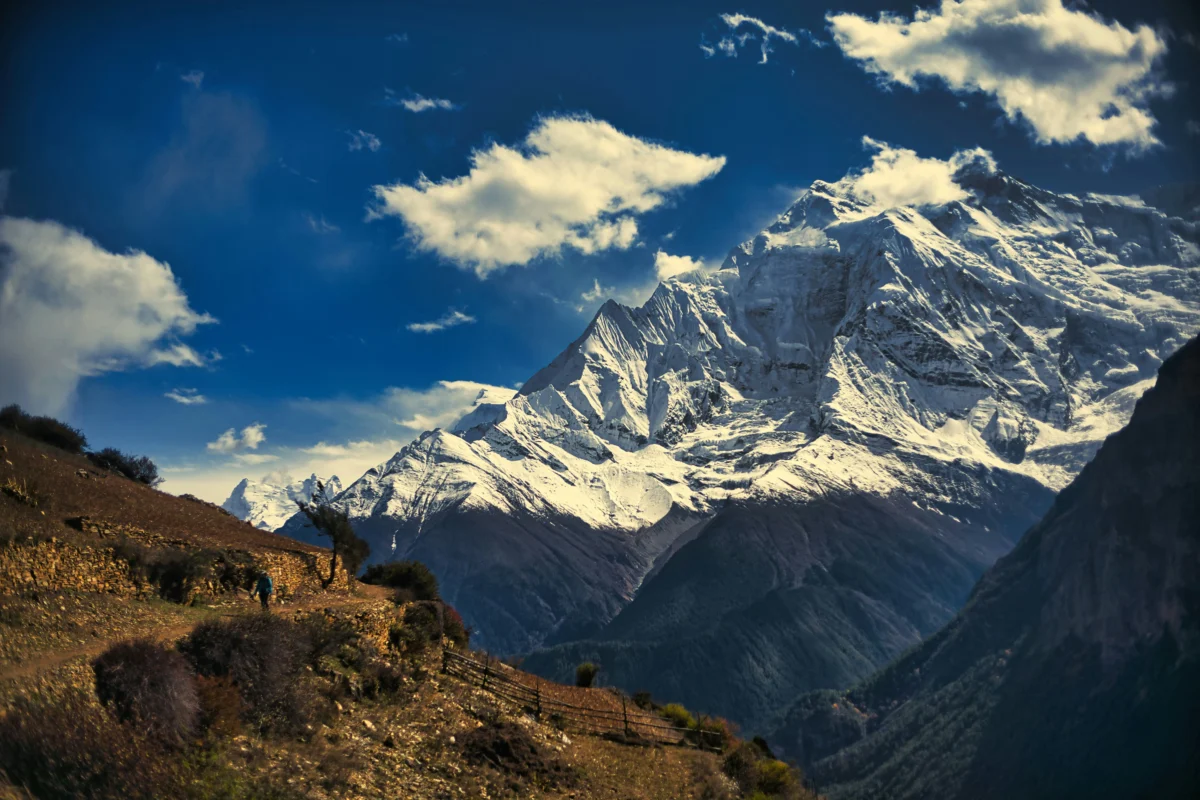
Trek: ~18 km · 5 to 6 hours
Continue along the high route through Ngawal before descending to Braga — a medieval-feeling village of stacked stone houses climbing a cliff face, with a 500-year-old monastery worth an hour of your time. From Braga, it is a short walk to Manang, your acclimatization base. Manang village is a crucial acclimatization stop that helps the body adapt to altitude while offering stunning views of Mount Annapurna II and Gangapurna.
Day 5: Acclimatization Day — Manang (3,519 m)
Hike to Gangapurna Lake or Ice Lake (4,600 m)
Do not skip this day. Above 3,000 meters, acclimatization is what separates trekkers who reach Thorong La from those who turn back. The rule of thumb: climb high, sleep low. Hike up to Gangapurna Lake or the more challenging Ice Lake — both offer stunning glacier views — and return to Manang for the night. The Himalayan Rescue Association clinic in Manang offers free altitude sickness lectures every afternoon during peak season. Attend one if you can.
Day 6: Manang → Tilicho Base Camp (4,150 m) — Optional Side Trip Day 1
Trek: ~12 km · 5 to 6 hours
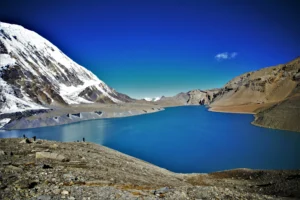
This side trip is worth every extra day. Tilicho Lake at 4,919 meters is one of the highest lakes in the world and widely considered the most visually spectacular reward on the entire Annapurna Circuit. Most trekkers skip it because it adds two days. Those who do it consistently say it was the highlight of the trek.
From Manang, a trail breaks off toward the valley leading to Tilicho Base Camp. The route crosses a dramatic landslide section that requires careful footing but is well-established. Tilicho Base Camp teahouses are basic but functional.
Day 7: Tilicho Base Camp → Tilicho Lake (4,919 m) → Yak Kharka (4,018 m)
Trek: ~16 km · 6 to 7 hours
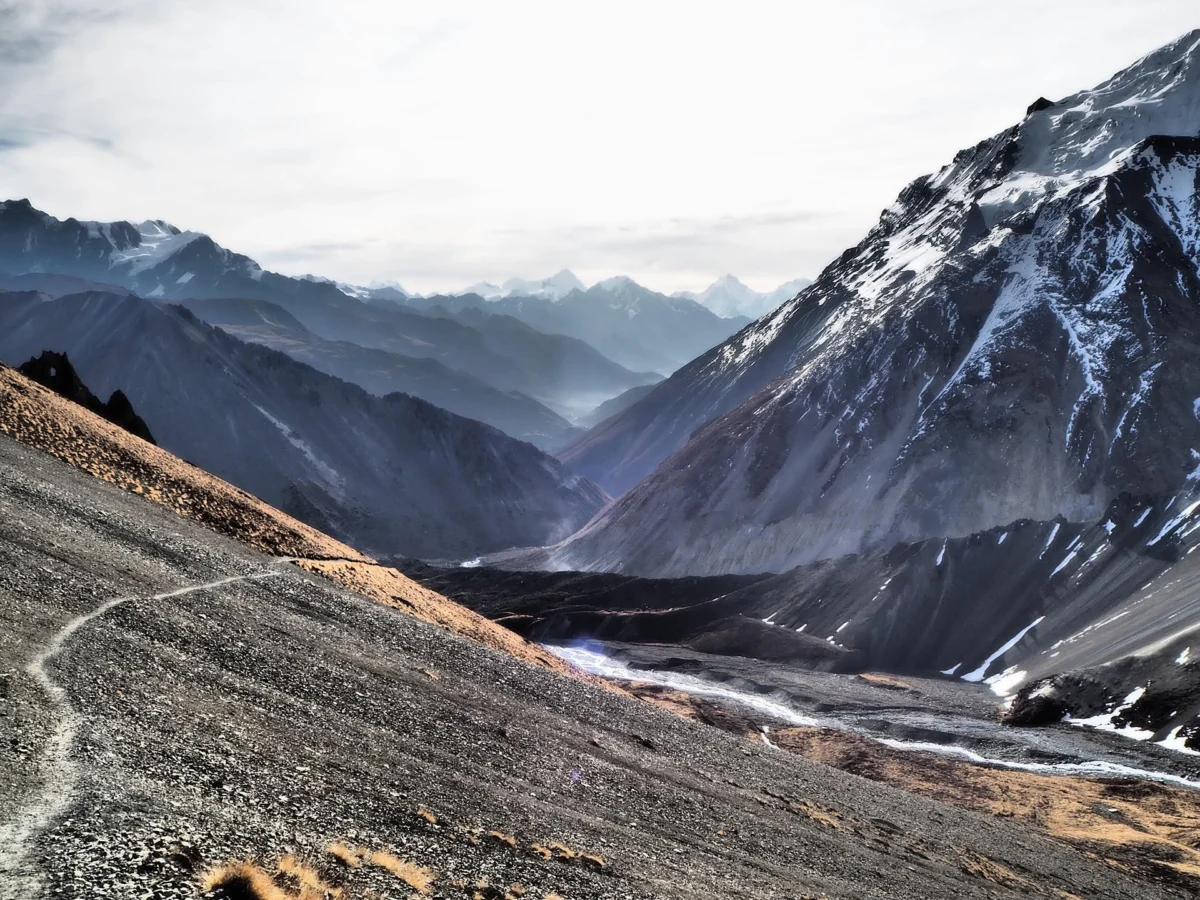
Rise before dawn to reach Tilicho Lake as the light hits the water. The lake is a stunning turquoise crescent set beneath ice walls and glaciers — one of the most extraordinary high-altitude landscapes in the Himalayas. Return to base camp, then continue along the high trail to rejoin the main circuit at Yak Kharka. This is a long day but the views throughout make it the single best day on the circuit for many trekkers.
Day 8: Yak Kharka → Thorong Phedi / High Camp (4,450 m – 4,850 m)
Trek: 4 to 5 hours
A shorter walking day by design — your body needs rest before the pass. The trail climbs steadily through increasingly bare, windswept terrain. Most trekkers push on to High Camp at 4,850 m for a shorter ascent the following morning. Arrive by early afternoon, eat a large dinner, hydrate aggressively, and sleep early. Tomorrow begins before dawn.
Day 9: Thorong La Pass Crossing → Muktinath (3,760 m)
The Biggest Day. Trek: ~18 km · 7 to 9 hours | Max Altitude: 5,416 m
Wake at 3:00 to 4:00 AM. The pre-dawn start is essential — afternoon winds on the pass can be fierce, and the descent to Muktinath takes several hours.
The trail climbs steeply up the moraine slope from High Camp. The terrain, often snow-covered, the altitude, and the cold morning air make it difficult. After walking for about four to five hours, you reach Thorong La Pass at 5,416 m, the highest point of the trek. From the top, the view is a 360-degree panorama: the Annapurna massif lies to the south and southwest, Dhaulagiri to the west, and the long Kali Gandaki gorge stretches below.
The famous “Congratulations” sign at the summit marks one of the great achievements in trekking. Then comes the descent — 1,600 meters of altitude loss to Muktinath through rocky, steep terrain that demands as much focus as the ascent.
The altitude drops by 1,600 meters as you move toward Muktinath Temple. The descent won’t be easy due to the rocky and steep path, with melting snow making some sections slippery.
Muktinath is one of the most sacred sites in both Hinduism and Buddhism — a temple complex at 3,760 meters visited by pilgrims from across Nepal and India. Spend the evening here before descending further into the Mustang valley.
Day 10: Muktinath → Jomsom (2,720 m)
Trek or drive: 4 to 5 hours on foot · 2 hours by jeep
The trail descends through the Kali Gandaki valley — the world’s deepest gorge, flanked by Dhaulagiri (8,167 m) and Annapurna (8,091 m) — into Jomsom, the main town of Lower Mustang. Afternoon winds in this valley are famous for their intensity; start early. Jomsom has the region’s airport, proper hotels, and the first hot showers in several days.
Day 11: Jomsom → Tatopani (1,200 m)
Drive or Trek: Jeep (2 to 3 hours) or 2-day walk
Most trekkers take a jeep from Jomsom to Tatopani, bypassing road-section trail that lost much of its charm when motor roads were built. Tatopani (which literally means “hot water”) is famous for its natural hot spring pools — the best possible way to recover after nine days of ascending and the pass crossing. Spend as long as you want in the springs.
Day 12: Tatopani → Ghorepani (2,860 m)
Trek: ~13 km · 5 to 6 hours | Altitude Gain: 1,660 m
A steep but beautiful climb through terraced farmland and rhododendron forest to Ghorepani — one of the most flower-covered villages on any Himalayan trail in spring. The trail passes through Shikha and Chitre, traditional Magar villages with stone houses and slate rooftops. Ghorepani sits on a ridge with stunning views of Dhaulagiri on clear evenings.
Day 13: Poon Hill Sunrise (3,210 m) → Tikhedhunga → Pokhara
Trek: 3 to 4 hours to Tikhedhunga, then drive to Pokhara
Wake at 5:00 AM for the one-hour climb to Poon Hill — the most famous sunrise viewpoint in Nepal. From Poon Hill, the full Annapurna and Dhaulagiri ranges are visible simultaneously, with Machhapuchhre’s perfect pyramid silhouette in the center. It is a view that stops every trekker regardless of how many mountains they have already seen.
Descend to Tikhedhunga or Nayapul, where vehicles meet you for the drive to Pokhara. Arrive by afternoon. Check into a lakeside hotel, eat a real meal, and sleep in the best bed you have seen in two weeks.
Day 14: Pokhara — Rest, Celebrate, Explore
Altitude: 820 m
Spend the day at Phewa Lake with the Annapurna range reflected in the water. Get a massage. Go paragliding if your legs have anything left. In the evening, celebrate the completion of one of the world’s great treks with your guide, porter, and fellow trekkers.
Day 15: Drive Pokhara → Kathmandu (6 to 7 hours) or Fly (25 minutes)
Return to Kathmandu by tourist bus or domestic flight. Flight is recommended — the saved time and comfort after 14 days of trekking is worth the $120 to $150 ticket price.
Permits for the Annapurna Circuit in 2026: The Accurate, Up-To-Date Picture
Many websites still publish outdated permit information. This section reflects ground-level enforcement as of June 2026.
What you actually need:
ACAP Permit: Mandatory, strictly enforced at every checkpoint from Besisahar onward. Every trek in the Annapurna region requires an ACAP permit, with no exceptions. The permit costs NPR 3,000 for foreign nationals plus 13 percent VAT, and is available at Nepal Tourism Board offices in Kathmandu and Pokhara, through registered trekking agencies, and via the NTNC online e-permit portal.
TIMS Card: TIMS is no longer enforced in the Annapurna region. Checkpoints verify conservation area permits only. The ACAP permit fee of NPR 3,000, approximately USD 22, is the only permit actively checked on Annapurna trails. Save your money.
Where to get your ACAP permit:
- Nepal Tourism Board office, Bhrikutimandap, Kathmandu (10 to 20 minutes if documents are ready)
- NTB office, Lakeside Road, Pokhara
- NTNC online e-permit portal (agency can process on your behalf)
- Through your registered trekking agency (simplest option — included in most packages)
Permits must be arranged before entering the trekking area, either in Kathmandu or Pokhara. There are no facilities to issue permits once you are on the trail.
Documents required: Passport (minimum 6 months validity), two passport-sized photos, completed application form, travel insurance details, guide verification.
Licensed guide — mandatory in 2026: As of updated regulations effective March 22, 2026, solo trekkers can now obtain permits for restricted areas without a minimum group size. However, independent solo trekking without a guide is still not permitted. A licensed guide is mandatory on all major Himalayan routes including the Annapurna Circuit.
Best Time to Trek the Annapurna Circuit in 2026
The Annapurna Circuit can technically be trekked year-round, but two seasons dominate for good reasons.
Autumn: September to November (Peak Season)
Post-monsoon autumn delivers the clearest skies, sharpest mountain views, and most reliable trail conditions of the year. October is the single busiest month in Nepal’s trekking calendar — the weather is near-perfect and the rhododendrons and forests are lush from the monsoon rains.
The tradeoff: teahouses book up fast, trail sections around Manang and Thorong Phedi get crowded, and prices run at their highest. Book your package and accommodation at least three to four months in advance for October travel.
Spring: March to May (Co-Equal Best Season)
Spring weather is often dry and temperate, providing clear mountain views every day with daytime highs of 15 to 20 degrees Celsius and nighttime lows of 8 to 12 degrees Celsius. The rhododendron forests between Ghorepani and Ghandruk bloom in vivid red and pink from late March through April — making spring arguably the most visually spectacular season for the lower sections of the circuit.
Spring is also when most Himalayan mountaineering expeditions are active. You may share sections of the trail with expedition teams heading toward Annapurna or Dhaulagiri base camps.
Monsoon: June to August (For Experienced Trekkers Only)
The Mustang and Manang sections of the circuit lie in a rain shadow and remain relatively dry even during monsoon. Experienced trekkers who want solitude and dramatic cloud-covered mountain scenery sometimes prefer this season. However, lower trail sections become slippery and leeches are a persistent issue below 2,500 meters. Not recommended for first-time Himalayan trekkers.
Winter: December to February (Cold but Possible)
Thorong La Pass can close for days or weeks due to snow in deep winter. Trekkers who do attempt it in winter need proper cold-weather gear, flexibility for delays, and ideally prior high-altitude experience. The upside: near-total solitude and crisp, clear views on good days.
Culture Along the Annapurna Circuit: What You Will Actually Experience
The cultural dimension of the Annapurna Circuit is what elevates it above a purely physical achievement.
The Gurung People
The lower sections of the circuit pass through Gurung villages — communities known historically as elite soldiers in Gurkha regiments. Gurung culture celebrates bold, colorful festivals, traditional weaving, and a distinctive animist-influenced form of Tibetan Buddhism. The village of Ghandruk is the heartland of Gurung culture and worth an extra day if you have it.
The Manangis
The high Manang valley above 3,500 meters is home to the Manangi people — traders who have historically moved goods between Tibet and the lowlands through the Thorong La Pass. Their villages of Manang, Ngawal, and Braga are architecturally unlike anywhere else in Nepal — stone terraces climbing hillsides, flat-roofed houses, and ancient monasteries perched above the valley floor.
The Thakali and Mustang Communities
Below the pass, the trail enters the Kali Gandaki valley and Mustang region — culturally Tibetan, Buddhist, and strikingly different from the Hindu lowlands. Muktinath temple at 3,760 meters is sacred to both Hindus and Buddhists, drawing pilgrims year-round. The Thakali people of Jomsom and Marpha are famous throughout Nepal for their apple orchards, distilled apple brandy (raksi), and the best dal bhat on the entire circuit.
Teahouse Culture
With the Annapurna Circuit being a well-liked trekking destination for more than half a century, there is no shortage of excellent accommodation along the route. Modern facilities like comfortable beds, Wi-Fi, hot showers, and Western toilets are available at most teahouses and hotels along the routes.
These are family-run guesthouses where the same family that grows your food, cooks your dal bhat, and runs the teahouse has lived in this valley for generations. That intimacy — eating dinner in a family’s dining room while their children do homework in the corner — is something no luxury hotel can replicate.
The Tilicho Lake Side Trip: Why Most Trekkers Regret Skipping It
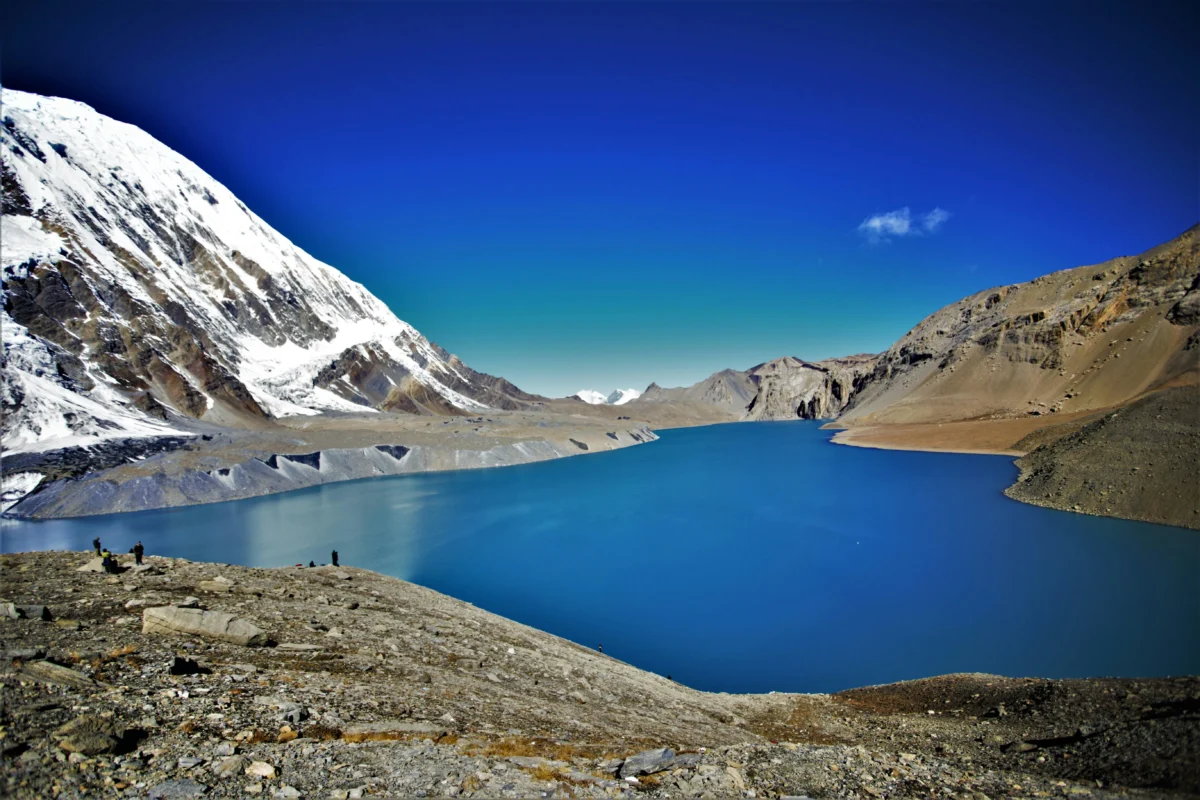
At 4,919 meters, Tilicho Lake is one of the highest lakes in the world — a vivid turquoise oval set beneath glacier walls in a side valley off the main circuit. Adding it costs two extra days and roughly $60 to $100, and it is consistently rated the single most memorable experience on the entire route.
If your schedule has room, add it. We cover the full approach, logistics, and what to expect in our dedicated Tilicho Lake Trek guide.
Annapurna Circuit vs Everest Base Camp: Which Should You Choose?
This is the most common planning question for Nepal trekkers. Here is the honest comparison.
| Annapurna Circuit | Everest Base Camp | |
|---|---|---|
| Cultural variety | Exceptional — 6+ distinct cultures | Primarily Sherpa culture |
| Landscape diversity | Subtropical to arctic desert | Alpine valleys and glaciers |
| Mountain views | Annapurna, Dhaulagiri, Machhapuchhre | Everest, Lhotse, Ama Dablam |
| Highest point | 5,416 m (Thorong La Pass) | 5,545 m (Kala Patthar) |
| Trek duration | 12 – 18 days | 12 – 14 days |
| Cost (standard) | $900 – $1,800 | $1,400 – $2,200 |
| Crowd level | Moderate (busier in peak season) | High (very busy Oct/Apr) |
| Best for | First-time Himalayan trekkers wanting variety | Iconic bucket-list mountain experience |
Choose the Annapurna Circuit if you want the most complete Himalayan experience — cultural depth, landscape diversity, and mountain drama in a single journey.
Choose Everest Base Camp if standing at the foot of the world’s highest mountain is the specific goal.
Many serious trekkers do both — typically EBC first, then the Circuit on a return visit. If you only go once, the Annapurna Circuit delivers more variety per day of trekking than any other route in Nepal.
Practical Tips: What to Know Before You Go
Gear essentials: Four-season sleeping bag (rated to -15°C for pass nights), down jacket, waterproof shell, trekking poles (essential for the Thorong La descent), moisture-wicking layers, headlamp, and water purification. Rent gear you do not own in Kathmandu’s Thamel district — a full rental kit costs $50 to $80 for the entire trek.
Cash: Withdraw Nepali Rupees in Kathmandu or Pokhara before the trek. There are no ATMs in remote areas after Besisahar or Chame. Carry 20% more than your estimated budget.
Altitude sickness: Symptoms — headache, nausea, dizziness, fatigue — can appear above 3,000 meters. The solution is always the same: stop ascending, rest, hydrate. Never ascend if symptoms persist. Consult your doctor about Diamox before departure.
Water: Carry a purification bottle or tablets rather than buying plastic bottles on the trail. Saves $80 to $120 and eliminates significant plastic waste.
Connectivity: Modern facilities like Wi-Fi are available at most teahouses and hotels along the routes. Starlink satellite internet has significantly improved connectivity on the upper sections of the circuit in 2026. Expect to pay $2 to $5 per session.
Pokhara buffer days: Build one to two extra days in Pokhara into your schedule at the end of the trek. Weather delays, a slower pace in the upper valley, or a spontaneous extra day at Tilicho Lake — these scenarios are common and deserve buffer time before your international connection.