Tilicho Lake Trek 2026: The Complete Guide to the World’s Highest Alpine Lake
Most trekkers in the Annapurna region walk straight past the turnoff to Tilicho Lake without realizing what they are missing.
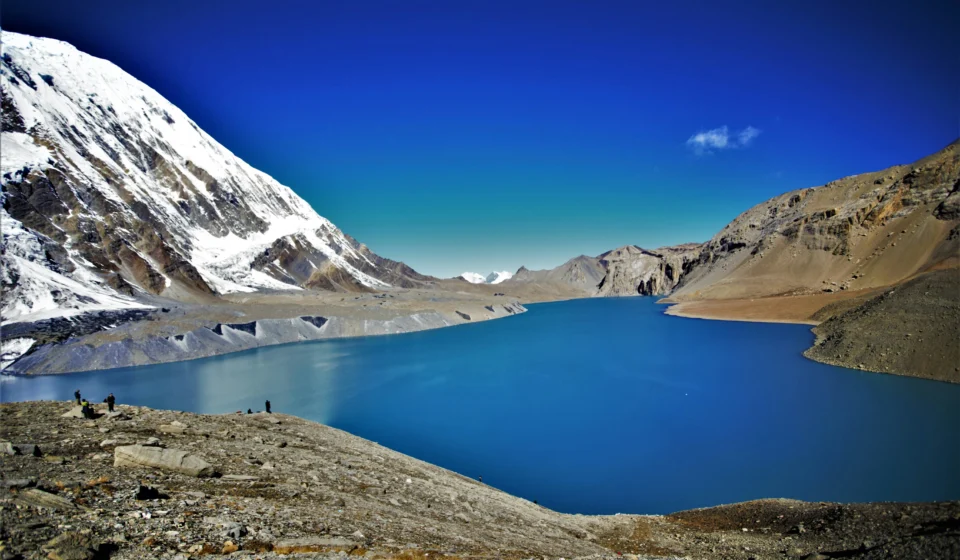
That turnoff — a narrow trail branching west from Manang — leads to one of the most extraordinary high-altitude landscapes on Earth. Tilicho Lake sits at 4,919 meters, cradled in a glacial basin ringed by peaks that exceed 7,000 meters. The water is a deep, vivid blue that shifts with the light. The silence at the shoreline is the kind that stops you mid-breath.
Unlike Everest Base Camp or the full Annapurna Circuit, Tilicho Lake remains genuinely off the mainstream trekking radar. The trail is less crowded, the approach is more remote, and the reward — standing at the edge of one of the world’s highest lakes with Annapurna and Tilicho Peak looming above — is one that very few trekkers in Nepal ever experience.
This guide covers everything you need to plan your Tilicho Lake Trek in 2026.
Quick answer on cost: A guided 10-day Tilicho Lake Trek costs $900 to $1,800 through a Kathmandu agency. All-in from Kathmandu — permits, insurance, tips, and trail extras — budget $1,300 to $2,400.
Tilicho Lake Trek at a Glance
| Detail | Information |
|---|---|
| Lake altitude | 4,919 m (16,138 ft) |
| Trek duration | 10 – 14 days from Kathmandu |
| Difficulty | Moderate to Challenging |
| Max altitude (with Thorong La) | 5,416 m |
| Best seasons | Spring (Mar–May) · Autumn (Sep–Nov) |
| Starting point | Besisahar or Chame (from Kathmandu) |
| Permit required | ACAP (~$22 USD) |
| Guide required? | Yes — mandatory under 2026 Nepal regulations |
| Package cost | $900 – $1,800 |
| All-in budget | $1,300 – $2,400 (from Kathmandu) |
Why Tilicho Lake Belongs on Your Nepal Itinerary
Tilicho Lake is the highest major lake in the world. That alone makes it one of the most remarkable geographical destinations accessible to non-technical trekkers anywhere on Earth.
But the altitude is only part of the story.
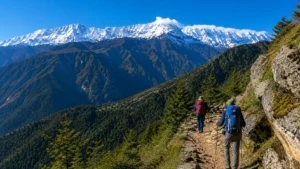
The approach to the lake takes you through terrain that most Annapurna Circuit trekkers never see — a remote side valley above Manang where the landscape shifts from alpine meadow into raw, windswept Himalayan desert. The trail crosses a notoriously exposed landslide section, traverses narrow ridgelines above dramatic drop-offs, and delivers you finally to a lakeside that feels genuinely untouched.
The lake is considered sacred by both Hindus and Buddhists. Local communities in the Manang valley have revered it for centuries. Standing at its edge in the early morning — before the afternoon winds build and the clouds roll in from the south — is an experience that sits in a different category from anything the main circuit trail offers.
For trekkers who have already done Everest Base Camp or the Annapurna Circuit, or for those visiting Nepal for the first time who want something beyond the standard routes, Tilicho Lake is the answer.
How Difficult Is the Tilicho Lake Trek?
The Tilicho Lake Trek is rated moderate to challenging — a step above the Annapurna Base Camp trek but manageable for any trekker with solid cardiovascular fitness and proper acclimatization.
The difficulty comes from three specific factors.
Sustained high altitude. You spend multiple days above 3,500 meters and reach nearly 5,000 meters at the lake itself. If combining with Thorong La, you cross above 5,400 meters. Altitude affects everyone differently regardless of fitness level.
Exposed terrain on the final approach. The trail from Tilicho Base Camp to the lake crosses a narrow, exposed shelf carved into a mountainside with steep drop-offs on both sides. It is not technical climbing, but it demands confident, steady footing and good weather conditions. Trekkers with serious concerns about exposed heights should discuss this section with their guide team before committing.
Cumulative fatigue. Ten to fourteen consecutive days of trekking at altitude produces tiredness that compounds progressively. Days that feel easy in the lower valley feel harder above 4,000 meters on the same legs.
What makes it achievable: The trail is well-established, teahouses are available at every major stop including Tilicho Base Camp, and the gradual ascent profile — when followed correctly — gives your body adequate time to adapt. No technical gear or climbing experience is required.
Minimum fitness standard: Comfortable hiking five to six hours per day with a daypack, with no history of serious altitude sickness. Begin cardio training three months before departure — running, stair climbing, and loaded hiking are the most effective preparation.
Tilicho Lake Trek Cost 2026: Full Breakdown
Package Costs
| Package Tier | Cost Per Person | What Is Included |
|---|---|---|
| Budget | $900 – $1,200 | Guide, shared porter, teahouse accommodation, meals, ACAP permit |
| Standard | $1,200 – $1,800 | Private rooms where available, senior guide, full logistics |
| Premium | $1,800 – $2,500 | Private guide, better lodges, flexible itinerary |
Book through a TAAN-certified Kathmandu agency. The same trek costs 40 to 80% more through a Western international operator for an identical trail experience.
Permit Cost
One permit is required: the Annapurna Conservation Area Permit (ACAP) at NPR 3,000 — approximately $22 USD for foreign nationals. TIMS is not enforced on Annapurna region trails in 2026. Your agency arranges the ACAP as part of the package.
Daily Trail Expenses
Budget $30 to $50 USD per day on the trail for food, water, hot showers, Wi-Fi, and device charging beyond what your package covers. Key altitude price increases to note:
- Bottled water: $0.50 near Besisahar → up to $3 to $4 near Tilicho Base Camp
- Dal bhat: $6 in lower villages → $10 to $12 above Manang
- Hot shower: $3 to $5 throughout
Carry sufficient Nepali Rupees from Kathmandu or Pokhara. There are no ATMs after Besisahar or Chame.
All-In Budget (From Kathmandu)
| Trekker Type | Package | Extras | Total |
|---|---|---|---|
| Budget group trekker | $1,000 | $350 | ~$1,350 |
| Standard guided trekker | $1,500 | $500 | ~$2,000 |
| Solo premium trekker | $2,000 | $600 | ~$2,600 |
International flights to Kathmandu not included.
Tilicho Lake Trek Itinerary: 10-Day Route from Kathmandu
This is the recommended standalone itinerary for the Tilicho Lake Trek — not combined with the full Annapurna Circuit. For the combined version, refer to our Annapurna Circuit Complete Guide 2026.
Day 1: Kathmandu → Drive to Chame (2,670 m)
Drive: 8 to 10 hours (Kathmandu → Besisahar → Chame by jeep)
A long drive through the Marsyangdi River valley to Chame, the administrative hub of the Manang District. Most agencies use a combination of shared bus to Besisahar and jeep onward to Chame, saving two to three days of road-walking on sections that are no longer scenic. Arrive by late afternoon. Chame has good teahouses, a bakery, and your first clear views of the Annapurna range.
Day 2: Chame → Upper Pisang (3,310 m)
Trek: ~14 km · 5 to 6 hours | Altitude Gain: 640 m
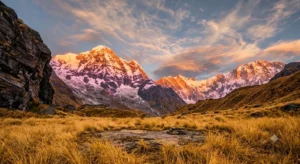
The trail climbs through dense pine and fir forests past the dramatic granite slab of Paungda Danda, with views of Annapurna II (7,937 m) and Pisang Peak (6,091 m) opening up steadily. Take the upper route from Pisang via Ghyaru — one hour longer than the valley route but delivering panoramic views of the entire Annapurna range that the lower road completely misses.
Day 3: Upper Pisang → Manang (3,519 m)
Trek: ~18 km · 5 to 6 hours
Continue through Ngawal and Braga — a medieval-looking village of stacked stone houses with a 500-year-old monastery perched above the valley — before arriving at Manang, the largest village in the upper circuit and your acclimatization base. Manang offers the best teahouses, cafes, and supplies of anywhere on the route ahead. Stock up on snacks and energy bars here.
Day 4: Acclimatization Day — Manang (3,519 m)
Hike to Gangapurna Lake or Ice Lake (4,600 m)
A mandatory rest day before ascending further. Hike up to Gangapurna Lake or the more demanding Ice Lake — both deliver glacier views that justify the effort and provide essential altitude preparation. The Himalayan Rescue Association clinic in Manang offers free altitude sickness talks most afternoons during peak season. Attend one if available. Return to Manang to sleep.
Day 5: Manang → Tilicho Base Camp (4,150 m)
Trek: ~11 km · 5 to 6 hours | Altitude Gain: 630 m
The trail branches west from Manang toward Khangsar village before beginning the approach to Tilicho Base Camp. This section crosses the route’s most demanding terrain before the lake itself — a notorious landslide zone where the trail narrows significantly and loose rock requires careful footing. Move steadily, follow your guide’s line, and do not rush this section. Tilicho Base Camp teahouses are basic but well-established. Settle in early, eat a large dinner, and rest.
Day 6: Tilicho Lake (4,919 m) and Return to Sri Kharka (4,050 m)
Trek: ~18 km round trip · 6 to 7 hours | The Main Event
Leave Base Camp at 5:00 to 5:30 AM. The pre-dawn start is essential — stable morning conditions give the clearest views and calmest winds before afternoon cloud builds from the south.
The trail from Base Camp climbs a long, exposed ridge with significant drop-offs on both sides. This traverse is the single most demanding section of the entire trek — not altitude alone, but the combination of elevation, narrow trail width, and loose underfoot terrain. Focus, steady footing, and patience get you through it.
Then Tilicho Lake appears.
The water is deep blue, almost impossibly vivid at this altitude. The glacial basin walls rise immediately above the far shore. Tilicho Peak (7,134 m) dominates the skyline. The silence is complete. Most trekkers sit quietly at the water’s edge for a long time before anyone says anything.
Return to Base Camp, collect your full pack, and descend further to Siri Kharka for the night — a lower altitude that aids recovery.
Day 7: Sri Kharka → Yak Kharka (4,018 m)
Trek: ~6 km · 3 to 4 hours
A short descent and traverse to rejoin the main Annapurna Circuit trail at Yak Kharka. This connector trail is less-travelled and genuinely beautiful — high alpine terrain with sweeping views back toward the Tilicho massif. Use the afternoon to rest fully. Tomorrow is a short ascent day but your body will benefit from the early stop.
Day 8: Yak Kharka → Thorong Phedi / High Camp (4,450 – 4,850 m)
Trek: 3 to 4 hours
A purposefully short day. The trail climbs steadily through bare, windswept alpine terrain to Thorong Phedi at the base of the pass, or continue to High Camp at 4,850 m for a shorter ascent the following morning. Most experienced trekkers push to High Camp. Eat a large dinner, hydrate aggressively, and sleep early. The alarm will go off before 4:00 AM.
(Note: Days 8 and 9 apply to trekkers combining Tilicho with the Thorong La crossing. If returning via Manang instead, skip to Day 9 alternate.)
Day 9: Thorong La Pass (5,416 m) → Muktinath (3,760 m)
Trek: ~18 km · 7 to 8 hours
Cross Thorong La Pass, the highest point of the entire route at 5,416 meters, before dawn. Four to five hours of continuous ascent in cold, pre-dawn conditions leads to a 360-degree panorama at the summit — the Annapurna massif to the south, Dhaulagiri to the west, and the Mustang valley stretching below. Then a steep, knee-testing 1,600-meter descent to Muktinath, one of the most sacred pilgrimage sites in both Hinduism and Buddhism.
Day 9 alternate (no Thorong La): Return from Tilicho Base Camp via Manang → drive by jeep to Besisahar → bus or jeep to Kathmandu or Pokhara. This shorter version saves two days but misses the pass crossing.
Day 10: Muktinath → Jomsom → Pokhara (820 m)
Drive or fly: Jeep from Muktinath to Jomsom (2 hours), then domestic flight to Pokhara (20 minutes) or drive onward (5 to 6 hours)
The domestic flight from Jomsom to Pokhara is one of the most scenic 20-minute flights in aviation — mountain walls on both sides of the valley, Dhaulagiri at eye level. At $120 to $150 per person, it is worth every rupee after ten days on the trail.
Arrive Pokhara by midday. Check into a lakeside hotel. The Annapurna massif reflects in Phewa Lake across the street. The trek is done.
Best Time to Trek to Tilicho Lake
Autumn (September to November) delivers the clearest skies, most stable trail conditions, and the sharpest mountain visibility. October is peak season — teahouses fill fast, so book packages at least three to four months ahead.
Spring (March to May) is equally strong. Clear morning skies and rhododendron bloom on the lower sections combine with manageable temperatures at altitude. Spring is slightly less crowded than October.
Winter (December to February): The approach trail to Tilicho Base Camp can be extremely icy and the landslide section becomes significantly more hazardous. Not recommended without high-altitude cold-weather experience.
Monsoon (June to August): The Manang valley sits partially in a rain shadow and stays drier than lower Nepal during monsoon, but trail conditions become unpredictable and the landslide approach to the lake is genuinely dangerous after heavy rain. Not recommended.
Permits and Guide Requirements for 2026
ACAP Permit: The only permit actively enforced on the Tilicho Lake trail. Costs NPR 3,000 (approximately $22 USD) for foreign nationals. Obtained in Kathmandu or Pokhara before the trek — not available on the trail.
Licensed guide — mandatory. Under 2026 Nepal Tourism Board regulations, all foreign trekkers must be accompanied by a licensed guide on Himalayan trekking routes above 3,500 meters. This applies to the Tilicho Lake Trek. Independent trekking without a licensed guide is prohibited.
For the Tilicho approach specifically, having a guide is more than regulatory compliance — the landslide section and the narrow exposed traverse to the lake genuinely benefit from someone who knows the trail’s current condition and safest line.
Practical Tips Before You Go
Start with proper acclimatization. Do not skip the rest day in Manang. The difference between a trekker who acclimatizes properly and one who pushes through is, in the Tilicho approach, the difference between reaching the lake and turning back at the Base Camp.
Leave for the lake before dawn. Afternoon clouds roll in regularly from the south by 11:00 AM to noon. A 5:00 AM departure from Base Camp gets you to the lake in clear, calm conditions and back before the weather turns.
The landslide section demands respect. Move steadily, follow your guide’s exact line, and do not wear headphones through this section. Rockfall, while infrequent, occurs without warning.
Carry cash from Kathmandu. There are no ATMs after Chame. Bring 20% more than your estimated daily budget.
Gear essentials: Four-season sleeping bag (rated to -15°C for Base Camp nights), down jacket, waterproof outer shell, trekking poles (essential on the lake traverse and descent), water purification, and a headlamp with fresh batteries. Rent everything except boots in Thamel — a full gear rental kit costs $50 to $80 for the entire trek.
Travel insurance: Non-negotiable. Your policy must cover helicopter evacuation to at least 6,000 meters. A policy without this coverage is effectively useless on the Tilicho approach.