Langtang Valley Trek: A Hidden Gem of Nepal (2025–2026 Guide)
If you’ve been dreaming of a Himalayan trek that combines dramatic mountain scenery, rich cultural heritage, and relative accessibility — all without the crowds of Everest Base Camp — then Langtang Valley deserves to be at the top of your list. Tucked just 60 kilometres north of Kathmandu, Langtang is often called Nepal’s “Hidden Gem,” and for good reason: most first-time visitors to Nepal head straight for Everest or Annapurna, leaving Langtang gloriously quiet by comparison.
This guide covers everything you need to plan your Langtang Valley Trek in 2025–2026: route options, day-by-day itineraries, permits, costs, gear, and honest advice on what to expect when you’re on the trail.
Why Trek Langtang Valley?
Langtang offers a compelling combination that’s hard to find elsewhere in Nepal. The valley sits inside Langtang National Park, Nepal’s first Himalayan national park (established 1976), and the trail winds through dense rhododendron and bamboo forests before opening onto alpine meadows framed by peaks that top 7,000 metres.
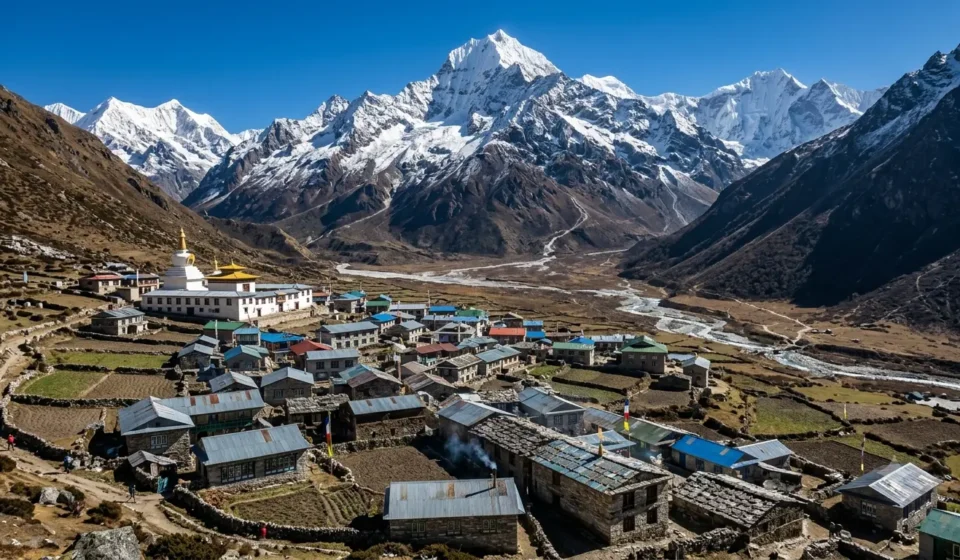
What makes Langtang special isn’t just the scenery — it’s the Tamang and Tibetan Buddhist culture woven through every village. Prayer flags snap in the wind, mani stone walls line the trail, and ancient gompas (monasteries) perch on ridgelines that have remained largely unchanged for centuries. At Kyanjin Gompa, the valley’s highest settlement at 3,870 m (12,697 ft), you can visit a small but fascinating yak cheese factory that has been producing cheese since the 1950s.
Langtang also carries a poignant history. The devastating 2015 Gorkha earthquake triggered an avalanche that buried much of Langtang Village, claiming over 200 lives. The trekking community rallied, and the trail was rebuilt. Trekking here today directly supports the communities who rebuilt their homes and livelihoods from the rubble — your lodge fee and your trail fees genuinely matter.
Langtang Valley Trek at a Glance
- Distance: approximately 65–75 km round-trip (standard route to Kyanjin Gompa)
- Duration: 7–10 days (including acclimatisation days)
- Maximum altitude: Tserko Ri — 4,984 m / 16,352 ft (optional summit); Kyanjin Ri — 4,773 m / 15,659 ft (easier alternative)
- Difficulty: Moderate
- Best seasons: Spring (March–May) & Autumn (September–November)
- Starting point: Syabrubesi (1,460 m / 4,790 ft)
- Trekking style: Tea house (lodge-based)
- Permits required: TIMS card + Langtang National Park entry permit
Langtang Valley Trek Route Options
Classic Langtang Valley Trek (7–9 Days)
The standard out-and-back route begins in Syabrubesi and follows the Langtang Khola (river) east through progressively higher settlements: Lama Hotel (2,380 m), Langtang Village (3,430 m), and finally Kyanjin Gompa (3,870 m). Most trekkers spend two nights at Kyanjin Gompa, using the extra day to summit either Kyanjin Ri or Tserko Ri for sweeping panoramic views of Langtang Lirung (7,227 m), Dorje Lakpa (6,966 m), and Ganesh Himal.
Langtang–Gosainkund–Helambu Circuit (14–17 Days)
For trekkers with more time, this classic circuit links the Langtang Valley with the sacred Gosainkund Lakes (4,380 m) and the Helambu region north of Kathmandu. It’s a more challenging route that involves a high-altitude crossing via Lauribina Pass (4,609 m) and rewards you with tremendous variety — glacial lakes, Hindu pilgrimage sites, Sherpa villages, and sweeping ridgeline walking. This route is best done in autumn when the passes are clear and stable.
Langtang–Gosaikunda Short Variant (10–12 Days)
A middle option that goes up the Langtang Valley to Kyanjin Gompa and then crosses over to Gosainkund rather than returning the same way. This is a popular choice for trekkers who want to avoid retracing their steps but don’t have time for the full Helambu loop.
Day-by-Day Itinerary: Classic Langtang Valley Trek (9 Days)
Day 1: Kathmandu to Syabrubesi (1,460 m)
The journey from Kathmandu to Syabrubesi takes approximately 7–9 hours by local bus or 5–6 hours by private jeep. The road winds through the Trisuli Valley and climbs into the hills before descending to this small town at the confluence of two rivers. Most trekkers take the bus the evening before or depart very early in the morning. Overnight in Syabrubesi.
Day 2: Syabrubesi to Lama Hotel (2,380 m) — 5–6 hours
The trail begins immediately outside Syabrubesi and climbs steeply through rhododendron and bamboo forests before dropping to the Langtang Khola. The forest section is genuinely beautiful — listen for red pandas and spot various species of Himalayan birds. Lama Hotel is a cluster of tea houses in a forested clearing; a good place to rest and adjust to the altitude gain.
Day 3: Lama Hotel to Langtang Village (3,430 m) — 5–6 hours
The valley opens up dramatically today. As the forest thins, giant peaks appear: Langtang Lirung’s south face fills the skyline ahead. You pass through Ghoda Tabela (3,030 m), where a Nepali Army post is stationed and permits are checked. Langtang Village itself is a rebuilt settlement with modern tea houses replacing those lost in 2015.
Day 4: Langtang Village to Kyanjin Gompa (3,870 m) — 3–4 hours
A shorter day that lets you arrive at Kyanjin Gompa early afternoon — enough time to visit the monastery, the cheese factory, and take an exploratory walk up the valley. The landscape here is alpine tundra: open meadows, grazing yaks, and 360° mountain views. The cheese factory is a genuine highlight; buy some of Nepal’s best hard cheese for the trail.
Day 5: Acclimatisation Day — Kyanjin Ri (4,773 m) or Rest
Spend the day acclimatising and exploring. Kyanjin Ri is a 3–4 hour return hike from the gompa and offers extraordinary views across the Langtang range. It’s significantly less demanding than Tserko Ri, making it the right choice if you’re feeling any altitude symptoms. Alternatively, walk up the glacier moraines or simply rest and read.
Day 6: Tserko Ri Summit Day (4,984 m) — 6–8 hours return
This is the highlight of the trek for most people. The climb to Tserko Ri is steep and demanding but entirely non-technical — just a long, grinding ascent on a clear path. The summit rewards you with what many consider the finest 360° panorama in the Langtang region: Langtang Lirung, Dorje Lakpa, Shishapangma (Tibet), Ganesh Himal, and on clear days, even peaks above Annapurna. Start early — by 5 am if possible — to beat clouds and afternoon wind.
Day 7: Kyanjin Gompa to Lama Hotel — 5–6 hours
Begin the return journey, retracing your steps down the valley. The descent goes quickly. Take a different path where possible — the valley floor and the higher trail have different perspectives on the same mountains.
Day 8: Lama Hotel to Syabrubesi — 5–6 hours
The final day of trekking descends through the forest back to Syabrubesi. Your knees will feel the drop. Celebrate with a cold beer and a hot meal at a Syabrubesi tea house.
Day 9: Syabrubesi to Kathmandu — 7–9 hours
Bus or jeep back to Kathmandu. Most trekkers arrive in the evening, exhausted and elated.
Langtang Valley Trek Permits
You’ll need two permits for the Langtang Valley Trek:
- TIMS Card (Trekkers’ Information Management System): USD $20 for independent trekkers, USD $10 if trekking with a registered agency. Obtain from the Nepal Tourism Board office in Kathmandu (Bhrikuti Mandap, Pradarshani Marg).
- Langtang National Park Entry Permit: NPR 3,000 (approximately USD $22) per person. Can be purchased at the national park entry gate in Dhunche or at the Department of National Parks in Kathmandu.
Carry both permits and your passport at all times — there are multiple checkpoints along the trail. Always keep photocopies stored separately.
How Much Does the Langtang Valley Trek Cost?
Langtang is one of Nepal’s most affordable major treks. Here’s a rough budget breakdown for a solo independent trekker:
- Permits: ~USD $42
- Bus transport (Kathmandu–Syabrubesi–Kathmandu): ~USD $15–20 total
- Tea house accommodation: USD $5–10 per night (rooms are often free or heavily discounted if you eat at the lodge)
- Meals on trail: USD $4–8 per meal (dal bhat is the best value and is unlimited)
- Total for a 9-day trek: approximately USD $350–550 for a budget independent trekker
Hiring a licensed guide typically adds USD $25–35 per day, and a porter USD $18–25 per day. These costs are offset by the significant advantages they bring — both in terms of safety and in terms of supporting the local economy.
Best Time to Trek Langtang Valley
Autumn (September–November) is widely regarded as the best time for the Langtang Valley Trek. Post-monsoon skies are crystal clear, the vegetation is lush and green, and temperatures are stable. October is peak season.
Spring (March–May) is the second-best season. Rhododendrons bloom explosively along the lower trail in March and April, and temperatures are warmer than autumn. Mountain views can be hazier due to pre-monsoon haze, particularly in May.
Winter (December–February) is cold but possible on the lower parts of the trail. Kyanjin Gompa receives snowfall and temperatures can drop to -15°C or below at night. Some tea houses close. Not recommended for inexperienced trekkers.
Monsoon (June–August) is generally not recommended. Trails are muddy, leeches are numerous, views are cloud-blocked, and landslide risk is elevated. That said, the valley is very green and nearly deserted if solitude is what you seek.
Altitude and Acclimatisation on the Langtang Trek
The Langtang Valley Trek reaches altitudes that can cause Acute Mountain Sickness (AMS) in susceptible individuals. Kyanjin Gompa at 3,870 m is high enough to cause headaches and disrupted sleep for many trekkers, and Tserko Ri at 4,984 m is well into altitude sickness territory.
The golden rule of altitude is ascend slowly, descend immediately if symptoms worsen. The itinerary above builds in a proper acclimatisation day at Kyanjin Gompa, which is essential. Do not skip this day. Symptoms of AMS include persistent headache, nausea, dizziness, fatigue, and loss of appetite. If symptoms are moderate to severe, descend immediately — do not wait to see if you improve overnight.
Consult your doctor about acetazolamide (Diamox) before the trek. It’s widely used as a preventive measure and can significantly reduce AMS symptoms.
Tea Houses and Accommodation
The Langtang Valley has a well-developed tea house network. From Syabrubesi to Kyanjin Gompa, you’ll find lodges at every major stopping point — Lama Hotel, Riverside, Ghoda Tabela, Langtang Village, Mundu, and Kyanjin Gompa all have multiple options. Rooms are simple but clean: twin beds with mattresses and blankets, shared squat or western toilets, and (increasingly) hot showers available for a surcharge of USD $2–3.
Electricity and WiFi are available at most lodges now, though connectivity becomes less reliable as you gain altitude. Charging your devices usually costs NPR 200–400 per charge. Solar charging is common in the upper valley.
The standard arrangement is to pay for meals at the lodge where you sleep — this is how lodge owners make their money, and skipping meals at your sleeping lodge to eat at a cheaper neighbour is considered poor form in the trekking community.
Wildlife in Langtang National Park
Langtang National Park is home to impressive biodiversity. Keep your eyes open for:
- Red panda — nocturnal and elusive, but occasionally spotted in the bamboo forest between Syabrubesi and Lama Hotel
- Himalayan black bear — present but rarely seen
- Ghoral and serow (mountain goat-antelopes) — often spotted on rocky slopes
- Snow leopard — extremely rare sighting, but resident in the high valleys
- Monal pheasant (Nepal’s national bird) — gloriously coloured and commonly seen in the lower forest
- Yaks and domesticated crossbreeds (Dzos) — grazing throughout the upper valley
Practical Tips for the Langtang Valley Trek
Getting to Syabrubesi: Daily local buses depart from Machhapokhari bus stand in Kathmandu from around 6–7 am. The journey is long and the road is rough — sit at the front of the bus if possible. Private jeeps are significantly more comfortable and faster; arrange these through your hotel or a trekking agency for around USD $70–90 per vehicle.
Cash: There are no ATMs beyond Dhunche. Bring sufficient Nepali rupees from Kathmandu. Most tea houses do not accept cards.
Water: Drink only boiled, filtered, or treated water. Carry a water bottle with a built-in filter (such as a Sawyer Squeeze) to reduce plastic waste and cost. Bottled water becomes increasingly expensive as you gain altitude.
Tipping: If you hire a guide or porter, tip generously at the end of the trek. A standard tip is NPR 500–1,000 per day of service.
Solo trekking: Unlike some other Nepali treks, Langtang Valley does not currently require trekkers to use a guide or agency. However, a licensed guide significantly enhances safety, cultural understanding, and — crucially — supports local employment.
Summary: Is the Langtang Valley Trek Right for You?
The Langtang Valley Trek is an outstanding choice for trekkers who want a genuine Himalayan experience without the logistical complexity or expense of Everest Base Camp or the Annapurna Circuit. It’s close to Kathmandu (no flights required), moderate in difficulty, rich in cultural encounters, and surprisingly uncrowded for a trek of this quality.
If you have 8–10 days, a reasonable level of fitness, and a desire to see Nepal at its most authentic — Langtang is waiting.
Read More in This Series
- Nepal Trekking: The Complete Beginner’s Guide (2025–2026)
- Everest Base Camp Trek: The Ultimate Guide
- Annapurna Circuit Trek: Everything You Need to Know
- Nepal Trekking Permits: The Complete 2025–2026 Guide
- Altitude Sickness in Nepal: Prevention, Symptoms & Treatment