Gokyo Lake Trek: An Alternative to Everest Base Camp
Introduction: The Trek Everest Base Camp Doesn’t Want You to Know About
Ask ten trekkers about the Khumbu region and nine will mention Everest Base Camp. The tenth will smile knowingly and say “Gokyo.” That’s not a coincidence — the Gokyo Lakes Trek delivers views many veteran trekkers rate as superior to EBC itself, on trails that are noticeably quieter, all while staying within the same Sagarmatha National Park.
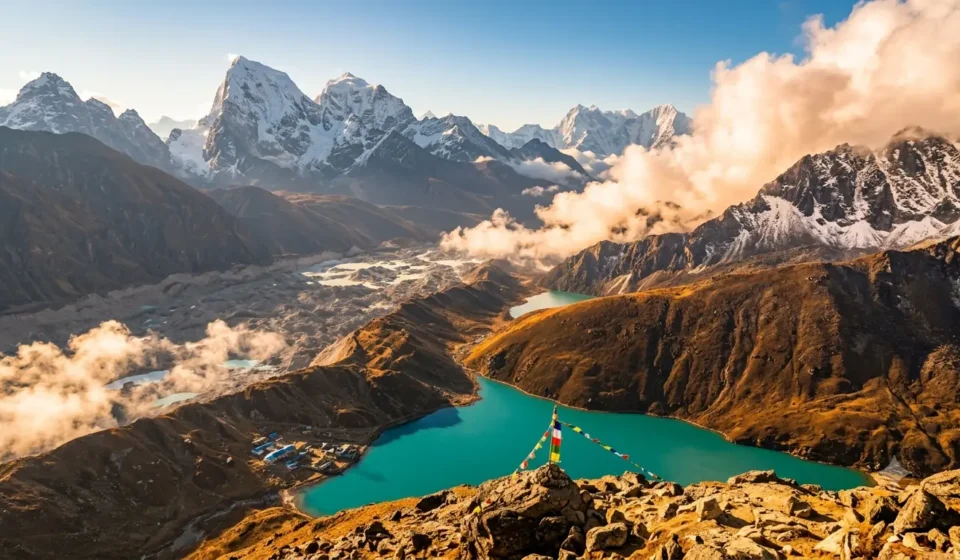
Instead of ending at a base camp with no mountain view (Everest is famously hidden from its own base camp), the Gokyo route climbs to Gokyo Ri (5,357m/17,575ft), a summit that puts four of the world’s six highest peaks — Everest, Lhotse, Makalu, and Cho Oyu — in a single frame. Along the way, you’ll pass a chain of glacial lakes so blue they look photoshopped, and cross the largest glacier in the Nepalese Himalaya.
This guide covers everything you need to plan the trek for the 2025–2026 season: route, distance, difficulty, costs, permits, and how it compares to (or combines with) the classic EBC trail.
Trek Overview: Key Facts
- Region: Khumbu, Sagarmatha National Park
- Duration: 12–14 days round trip from Lukla (standalone); 16–19 days if combined with Everest Base Camp via Cho La Pass
- Distance: Approximately 90–100 km (56–62 miles) round trip
- Max altitude: Gokyo Ri, 5,357m (17,575 ft)
- Difficulty: Moderate to challenging — high altitude is the main obstacle, not technical terrain
- Best seasons: March–May (spring) and late September–November (autumn)
- Starting point: Lukla (2,860m), reached by a short mountain flight from Kathmandu or Ramechhap
The Route, Step by Step
Lukla to Namche Bazaar (Days 1–3)
The trek begins like every Khumbu adventure: a hair-raising landing at Tenzing-Hillary Airport in Lukla, followed by a gentle walk through pine forest and Sherpa villages to Phakding, then a steeper climb along the Dudh Koshi River to Namche Bazaar (3,440m), the unofficial capital of the Khumbu. Most itineraries build in an acclimatization day here — use it to hike up to the Everest View Hotel or the Sagarmatha National Park museum.
Namche to Gokyo (Days 4–7)
This is where the Gokyo route splits from the EBC crowds. Instead of continuing straight up the Dudh Koshi valley toward Tengboche, you branch west through Mong La, Dole, and Machhermo, gaining altitude more gradually — a genuine advantage for acclimatization. Another rest day around Machhermo or Dole is strongly recommended before pushing on to Gokyo village (4,750–4,790m), which sits directly on the shore of the third and largest of the Gokyo Lakes, Dudh Pokhari.
The Gokyo Lakes and Gokyo Ri (Days 7–9)
There are six recognized Gokyo Lakes, part of a Ramsar-listed wetland system and considered sacred by both Hindu and Buddhist communities. Most trekkers explore the third, fourth, and sometimes fifth lakes, which sit progressively higher and quieter. The undisputed highlight, though, is the pre-dawn climb up Gokyo Ri. It’s a steep 600m ascent from Gokyo village, but the payoff — sunrise over Everest, Lhotse, Makalu, and Cho Oyu, with the Ngozumpa Glacier snaking below — is one of the most photographed views in the Himalaya.
Adventurous trekkers with extra days can also walk out onto the Ngozumpa Glacier itself, the longest glacier in Nepal, or push further to Fifth Lake (Ngozumpa Tsho) for an even more remote, crevasse-and-ice landscape.
Return, or Continue via Cho La Pass
Most trekkers retrace their steps to Namche and Lukla. But if you have the time, fitness, and a good guide, the Cho La Pass (5,420m) connects Gokyo directly to the Everest Base Camp trail near Dzongla, letting you combine both iconic routes into one 16–19 day loop. Cho La involves some glacier travel and occasional snow/ice underfoot, so it’s a step up in difficulty from the standard EBC or Gokyo routes on their own — a guide and, in some seasons, microspikes are strongly advised.
How Hard Is the Gokyo Lakes Trek?
Technically, the trail itself is straightforward — well-marked teahouse trekking on established paths, no ropes or climbing gear required. The real challenge is altitude. Gokyo village sits higher than Everest Base Camp’s approach villages, and Gokyo Ri tops out above 5,350m, so this is not a trek to rush. Budget the extra acclimatization days, walk at a slow and steady pace, and take the “climb high, sleep low” principle seriously. Reasonable fitness (regular hiking or cardio training beforehand) will make the long uphill days far more enjoyable — see our training guide in this series for a step-by-step prep plan.
Permits and Costs
Two permits are required for the Gokyo region, both checked in Monjo/Namche:
- Sagarmatha National Park Entry Permit: around $30 USD
- Khumbu Pasang Lhamu Rural Municipality Permit: around $20 USD
Budget roughly $1,200–$1,900 USD per person for a 12–14 day standalone Gokyo trek, including domestic flights, permits, a licensed guide (typically $25–35/day), teahouse lodging ($5–10/night, often free with meals purchased), and three meals a day on the trail ($25–35/day at higher elevations, where prices climb along with the altitude). Solo trekkers can shave costs by skipping a porter, but a guide is highly recommended for route-finding around the lakes and glacier, and for safety at altitude.
Best Time to Go
Spring (March–May) brings warmer days, blooming rhododendrons at lower elevations, and generally stable weather, though pre-monsoon haze can soften mountain views by late May. Autumn (late September–November) is widely considered the best window: crisp, clear skies and the most reliable Gokyo Ri sunrise views, though teahouses are busier than they used to be even on this “quiet” route. Winter (December–February) is possible for experienced, cold-hardy trekkers but expect sub-zero nights and a real chance of the Cho La Pass being snowed in.
Gokyo vs. Everest Base Camp: Which Should You Choose?
If your priority is standing at the literal base of the world’s tallest mountain and soaking in Khumbu’s biggest-name trail, EBC is unbeatable for that bragging right. If your priority is the best actual mountain photography, turquoise alpine lakes, a glacier walk, and noticeably fewer trekkers on the trail, Gokyo wins. Many seasoned Nepal trekkers argue Gokyo Ri’s panorama beats the EBC viewpoint at Kala Patthar. The good news: with the Cho La Pass link, you don’t have to choose — just add a few extra days.
Packing and Preparation Notes
Pack for genuine high-altitude cold: down jacket, insulated sleeping bag rated to at least -15°C, sturdy broken-in boots, sun protection (the glacier reflection is intense), and trekking poles for the steep Gokyo Ri ascent. See our full gear and packing list post in this series for a complete checklist.
Final Thoughts
The Gokyo Lakes Trek proves that Nepal’s Khumbu region has far more to offer than a single famous trail. Sacred glacial lakes, a summit view that rivals anything in the Himalaya, and a walk across Nepal’s largest glacier — all with a fraction of the foot traffic of EBC. For trekkers who’ve done their research and want something a little less crowded but every bit as spectacular, Gokyo deserves a top spot on the list.