Altitude Sickness During a Trek
Every year, tens of thousands of trekkers walk into the Nepali Himalaya believing altitude sickness is the only thing that can stop them. It isn’t. Altitude sickness in Nepal is the headline risk — the one guidebooks lead with — but it sits alongside frostbite, gut infections, sunburn severe enough to blister, and cardiac strain that has nothing to do with fitness level. This guide covers all of it: what the numbers actually say about your odds, how risk shifts by season, and what changes if you’re trekking at 12 or at 65.
No recycled warnings. Just what the data shows and what to do with it.
Quick Facts: Altitude Sickness in Nepal
| Metric | Data |
|---|---|
| AMS incidence, 3,000–4,000 m (Khumbu) | ~10% |
| AMS incidence, 4,500–5,000 m (Khumbu) | ~51% |
| Trekkers flying direct to Lukla who develop AMS | ~47% |
| EBC trekkers with any medical incident | 40.5% (about half were AMS) |
| HAPE/HACE cases, HRA Manang aid post (2018–2023) | 337 of 2,904 visits (11.6%) |
| HAPE mortality, untreated vs. treated | 50% vs. 11% |
| HACE mortality if untreated | Can be fatal within 48 hours |
| Trekkers with pre-existing medical conditions | ~45% (mostly cardiac and orthopaedic) |
| Trekkers over age 50 | ~10% |
| UV increase per 1,000 m of elevation gained | ~10–12% |
| Safe sleeping-altitude gain above 3,000 m | 300–500 m per day |
What Actually Causes Altitude Sickness
Above roughly 2,500 m, atmospheric pressure drops enough that each breath delivers meaningfully less oxygen. Your body responds by breathing faster and producing more red blood cells, but that adaptation takes days, not hours. Altitude illness happens when you gain elevation faster than your body can keep up — it is a mismatch between ascent rate and acclimatisation, not a fitness test. A strong runner who flies into Lukla and pushes hard on day one is at real risk; a slower trekker who paces the climb properly usually isn’t.
There are three recognised altitude illnesses, and they are not interchangeable in severity.
Acute Mountain Sickness (AMS)
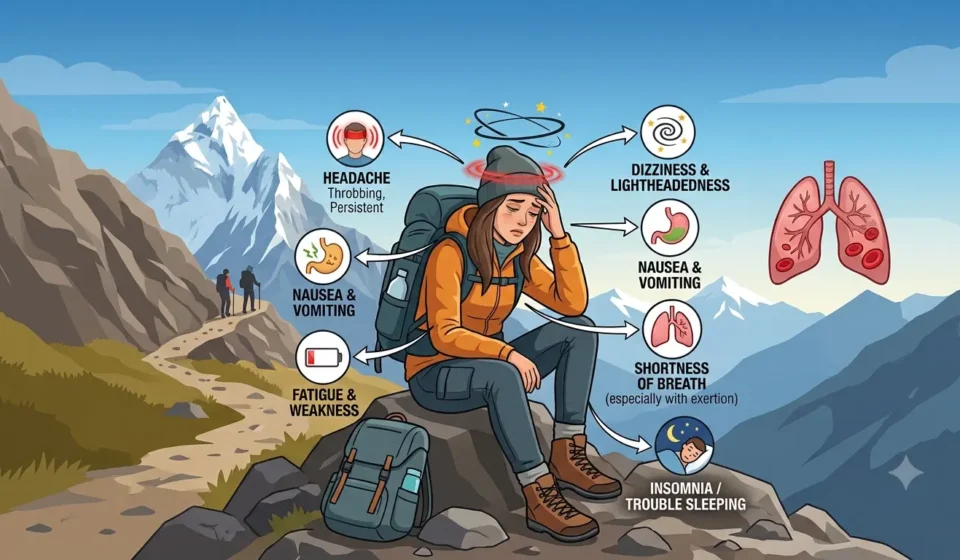
The common one. Headache plus at least one of nausea, fatigue, dizziness, or loss of appetite, typically appearing 6–12 hours after arrival at a new altitude. In the Khumbu, incidence climbs sharply with elevation: roughly 0% at 2,500–3,000 m, around 10% at 3,000–4,000 m, about 15% at 4,000–4,500 m, and a steep jump to roughly 51% at 4,500–5,000 m. Studies across the Khumbu and Annapurna regions put overall AMS rates anywhere from 16% to nearly 50%, and trekkers who fly straight to Lukla rather than walking in gradually show AMS rates around 47%. On the Everest Base Camp trek specifically, 40.5% of trekkers report some kind of medical incident during the trip, and roughly half of those are AMS.
AMS is uncomfortable but manageable if you stop ascending and let your body catch up. It becomes dangerous only when ignored.
High Altitude Pulmonary Edema (HAPE)
Fluid builds up in the lungs. Symptoms include breathlessness at rest, a persistent cough (sometimes producing pink or frothy sputum in advanced cases), chest tightness, and extreme fatigue. HAPE is fatal in roughly 50% of untreated cases; with prompt descent and treatment, mortality drops to around 11%. That gap is the entire argument for taking early symptoms seriously and descending immediately rather than “seeing how it goes overnight.”
High Altitude Cerebral Edema (HACE)
The most dangerous of the three. Swelling in the brain causes confusion, loss of coordination (a stumbling, drunk-like gait is the classic warning sign), severe headache unrelieved by painkillers, and eventually loss of consciousness. HACE can be fatal within 48 hours if untreated. It often develops from unresolved AMS or alongside HAPE.
Data from the Himalayan Rescue Association’s Manang aid post between 2018 and 2023 recorded 337 altitude-illness cases out of 2,904 visits (11.6%) — including 40 HAPE cases, 11 HACE cases, and 12 people with both simultaneously. The combined HAPE-and-HACE cases were significantly more common among people who had ascended fastest, which is the single clearest pattern in the data: rate of ascent predicts severity better than any other factor.
Symptoms by Severity: When to Stop, When to Descend
| Severity | Symptoms | Action |
|---|---|---|
| Mild AMS | Headache, mild nausea, fatigue, poor sleep | Stop ascending. Rest at the same altitude, hydrate, consider acetazolamide. |
| Moderate AMS | Worsening headache, vomiting, dizziness, reduced coordination | Do not ascend further. Descend if no improvement within 24 hours. |
| Severe AMS / early HAPE or HACE | Breathlessness at rest, confusion, ataxia (stumbling), persistent cough, cyanosis (blue lips/fingertips) | Descend immediately — 500–1,000 m minimum. This is a medical emergency. Arrange evacuation. |
The golden rule repeated by every mountain medicine body, including the Himalayan Rescue Association: never ascend with symptoms of AMS, and never leave a symptomatic person alone or assume they’ll be fine after sleeping it off. HACE deaths are disproportionately cases where people continued climbing, or where a group pushed on assuming symptoms would pass.
Beyond Altitude: The Other Health Risks Nobody Mentions
Altitude sickness gets the headlines, but it isn’t the most common thing that will actually derail your trek.
Gastrointestinal Illness
This is the single most likely health issue you’ll face, altitude aside. Around 30% of trekkers in Nepal report becoming sick with diarrhoea, vomiting, fever, or a cold during their trip, and gastrointestinal complaints are the top diagnostic category among travellers to Nepal generally, at roughly 32% of all medical issues recorded — ahead of pulmonary (16%) and skin-related problems (9%). Contamination of shared water sources, inconsistent food handling at altitude, and general traveller’s diarrhoea (which affects 30–70% of travellers to similar destinations within a two-week window) are the drivers. Treat all water as unsafe unless boiled, filtered, or chemically treated, and be selective about raw vegetables and unpeeled fruit, especially below Namche where irrigation water quality is inconsistent.
Hypothermia and Frostbite
Cold injury is a genuine risk at any time of year above 4,000 m, and it compounds with dehydration, wind chill, and wet clothing. Frostbite develops in recognisable stages: frostnip first (pain, tingling, numbness — still reversible), then superficial frostbite (skin discoloration, swelling, blistering), and finally deep frostbite, where tissue death is visible within about 10 days and can require amputation of fingers or toes. It most commonly affects extremities and exposed skin — fingers, toes, nose, ears. Wet gloves or boots dramatically raise the risk, which is why gear quality above the tree line isn’t a luxury consideration.
UV Exposure, Sunburn, and Snow Blindness
UV radiation increases by roughly 10–12% for every 1,000 m of elevation gained, and fresh snow reflects up to 80% of incoming UV back at you — meaning you’re being hit from above and below simultaneously above the snow line. Combined with thinner atmosphere and, often, cold wind that masks the sensation of burning, trekkers regularly get severe sunburn without realising it until the damage is done. Photokeratitis, or snow blindness — a painful, temporary corneal burn from UV overexposure — is a real risk on glacier crossings and snow-covered passes without proper glacier glasses (not standard sunglasses).
Musculoskeletal Injury and Dehydration
Ankle sprains, knee strain on long descents, and blisters are the unglamorous but statistically significant injuries on any multi-day trek — orthopaedic issues are one of the two most common pre-existing conditions trekkers report, alongside cardiovascular disease. Dehydration compounds nearly every other risk on this list: it thickens blood, worsens AMS symptoms, and increases frostbite susceptibility by reducing peripheral circulation. Altitude also suppresses thirst response, so trekkers routinely under-drink without noticing. Aim for 3–4 litres a day at altitude, more if you’re on Diamox (which increases urination).
Health Risks by Season: How the Weather Window Changes the Equation
Spring (March–May)
The most crowded season on major routes, which has its own health implications — busier lodges, more shared surfaces, higher chance of picking up a cold or GI bug from fellow trekkers. Pre-monsoon haze can reduce visibility, and daytime warmth followed by sharp overnight temperature drops catches under-prepared trekkers off guard. Rhododendron pollen is a minor but real irritant for trekkers with seasonal allergies at lower elevations.
Autumn (September–November)
The most stable weather window and statistically the safest season for altitude-related incidents, mainly because trail and lodge conditions are predictable and rescue access (both on foot and by helicopter) is at its most reliable. That said, October’s popularity means more people rushing itineraries to match fixed flight or holiday windows — a known driver of AMS, since compressed schedules mean compressed acclimatisation.
Winter (December–February)
Cold injury risk peaks. Frostbite and hypothermia become the dominant concern above 4,000 m, and several teahouses at higher elevations close entirely, reducing your safety margin if you need shelter or emergency support. Trails can ice over on shaded, north-facing sections, raising fall risk. Winter trekking is entirely possible on lower routes but requires cold-weather-rated gear and a realistic assessment of your tolerance for genuine cold, not resort-cold.
Monsoon (June–August)
Leeches are the signature nuisance — common in forested, wet trail sections below roughly 2,500 m. They’re medically harmless to healthy adults, but bites that aren’t cleaned properly can get infected, and the psychological toll of a leech-heavy day is real. More seriously, monsoon significantly raises waterborne illness risk (water sources are more contaminated after heavy rain) and landslide risk on exposed trail sections, which can range from a minor scramble to multi-day trail closures. Some rain-shadow regions — Upper Mustang, Manang, parts of Dolpo — stay comparatively dry and are genuinely viable monsoon options if you want solitude and don’t mind cloud-covered peaks.
Age Changes the Risk Profile — Here’s How
Older Trekkers (50+)
Around 10% of trekkers in Nepal are over 50, and the data on this group is worth taking seriously rather than treating as an afterthought. The average age of trekking fatalities in Nepal rose from roughly 35 in the mid-1980s to nearly 51 by the mid-2000s — not because older trekkers are inherently weaker, but because cardiac and pulmonary conditions become more prevalent with age and altitude exposure can unmask or worsen them. At just 2,500 m, pulmonary artery pressure in older adults has been shown to rise by around 43% on acute exposure, and older trekkers are considered an at-risk group specifically for HAPE. Roughly 45% of trekkers overall report a pre-existing condition, most commonly cardiovascular or orthopaedic — get a cardiac check and a frank conversation with your doctor before booking anything above 3,500 m if you’re over 50, have any history of heart or lung issues, or haven’t had a physical in a while.
None of this means older trekkers should stay home. It means a more conservative itinerary — extra acclimatisation days, no direct Lukla-to-high-altitude pushes, and a lower threshold for turning back — isn’t optional caution, it’s the appropriate strategy for the physiology involved.
Children
Most agencies won’t take children under 12–14 on routes that cross 3,500 m, such as Everest Base Camp, specifically because of elevated AMS risk in that age group — children have smaller lung capacity and less efficient acclimatisation than adults. Easier, lower-elevation routes can work for children as young as 5–7, and moderate treks like Annapurna Base Camp are generally considered appropriate from around age 10 with a fit child and an experienced guide. The practical challenge with young children is communication: kids who can’t yet articulate a headache or nausea may just become unusually irritable, clingy, or lose their appetite — parents need to actively watch for these non-verbal cues rather than waiting for a clear complaint. As a rule of thumb, avoid taking children above 4,000 m altogether, and always clear high-altitude plans with a paediatrician first.
Prevention: What Actually Reduces Risk
Ascend slowly. Above 3,000 m, limit your sleeping-altitude gain to 300–500 m per day, with a rest day roughly every 600–1,000 m gained (or every 2–3 nights). “Climb high, sleep low” — a strenuous day hike to a higher point followed by a descent to sleep is one of the most effective acclimatisation strategies available, and it’s why most well-designed EBC and Annapurna itineraries build in exactly this pattern around Namche Bazaar and Manang.
Consider acetazolamide (Diamox). The standard preventive dose is 125 mg twice daily, started 24–48 hours before you reach altitude and continued for at least 48 hours once you’re at your highest point. Research shows 125 mg twice daily is as effective as higher doses with fewer side effects, while doses below that threshold haven’t been shown to provide reliable protection. For children, dosing is weight-based (around 2.5 mg/kg every 12 hours) and should only be used under paediatric guidance. Diamox is a prescription medication — talk to a travel medicine doctor before you fly, not in a pharmacy in Kathmandu the night before you leave.
Hydrate deliberately. 3–4 litres per day, more if you’re on Diamox. Altitude blunts your thirst signal, so drink on a schedule, not on demand.
Protect your skin and eyes. SPF 50+, reapplied often, and glacier-rated sunglasses above the snow line — not standard sunglasses, which don’t block enough reflected UV to prevent photokeratitis.
Layer for cold injury prevention. Keep gloves and socks dry, change out of sweat-damp base layers at rest stops, and treat any numbness or tingling in fingers and toes as an immediate signal to rewarm, not something to push through.
Buy real insurance. A helicopter evacuation from altitude in Nepal typically costs $4,000–$10,000 without insurance. A policy that covers high-altitude trekking and evacuation to at least 6,000 m runs roughly $80–$200 — a rounding error next to the alternative. Confirm your policy explicitly covers the altitude you’re planning to reach; many standard travel policies cap out well below 4,000 m.
The Bottom Line
Altitude sickness is real, common, and the reason most Nepal trekking advice exists — but it’s one risk among several, and for most trekkers, a stomach bug or a bad sunburn is statistically more likely than HAPE. The pattern across nearly every data point in this guide is the same: risk tracks ascent speed, preparation, and how honestly you assess your own body’s signals, not how fit you are or how badly you want to reach the pass. Build in acclimatisation days, know the difference between “uncomfortable” and “dangerous,” carry real insurance, and adjust your itinerary around your actual age and health — not the itinerary in someone else’s blog post.